D Scaling Engineering Teams in LATAM: A Time and Materials Playbook
Por Redacción Aguayo
For product and technology leaders in highly competitive markets, execution speed is the ultimate differentiator between staying relevant and becoming obsolete. However, local recruitment is often slow and prohibitively expensive, creating significant bottlenecks in the product roadmap. In this landscape, the scaling engineering teams in LATAM: a time and materials playbook emerges as the preferred solution for companies seeking high-quality talent, cultural affinity, and an efficient cost structure.
The Latin American region has evolved from being a "low-cost" option into a strategic hub for global innovation. The central question we address in this analysis is: how can companies implement a scaling engineering teams in LATAM: a time and materials playbook to optimize product delivery and cost efficiency? Understanding the mechanics of this model is vital for scaling without losing control over code quality or team cohesion.
Approaching scaling from a strategic perspective allows B2B, Fintech, and Insurtech organizations to adapt to unforeseen changes in demand without the rigidity of fixed-price contracts. Below, we break down the necessary tactics to ensure this transition becomes an operational and financial success.

The Bridge to Operational Agility in Latin America
The scaling engineering teams in LATAM: a time and materials playbook consists of integrating Latin American developers under a billing model based on actual hours worked and resources consumed. This approach allows total flexibility to pivot requirements, ensuring the technical team evolves at the same pace as business needs.
- Flexibility: Real-time adjustment of team size based on the product life cycle.
- Transparency: Payment for actual effort, providing clear budget visibility.
- Time Zone Alignment: Facilitates real-time collaboration and reduces feedback loops.
- Talent Quality: Access to senior engineers with experience in global-scale products.
- Adaptability: Ideal for agile environments where scope is dynamic rather than static.
Expanding technological capabilities no longer depends on the physical geography of a central office, but on the ability to integrate distributed talent nodes organically. For years, many companies limited themselves to fixed-price models that, while offering a false sense of budgetary security, ended up stifling innovation due to contract rigidity and the bureaucracy of scope changes.
Today, the dynamism of sectors like digital banking and insurance demands a human infrastructure that can pivot in weeks, not months. Latin America has consolidated itself as the natural ally for companies in North America and Europe due to its hourly proximity and growing maturity in software engineering processes. It is not just about hiring developers; it is about building an extension of your own engineering culture in a fertile and aligned territory.
Successfully implementing a scaling engineering teams in LATAM: a time and materials playbook requires a deep understanding of how the Time and Materials (T&M) model intertwines with agile methodologies. By removing the barriers of a closed scope, teams can focus on what truly matters: delivering value to the end user incrementally and constantly. At Aguayo, we have observed that the key lies in trust and metric transparency.
From Tactical to Strategic Scaling: A Paradigm Shift
The Reactive vs. Proactive Approach
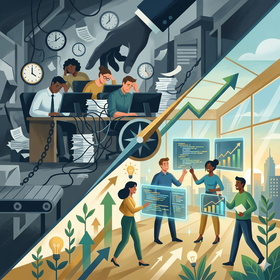
Traditionally, team scaling was seen as an emergency response: "we need three developers by yesterday." This tactical approach usually ignores technical debt and team culture. Conversely, the scaling engineering teams in LATAM: a time and materials playbook proposes a strategic vision where the external team is integrated into the client's ceremonies, product vision, and quality standards, functioning as a single unit.
The Time and Materials Model as an Innovation Engine
Unlike closed contracts, the T&M model encourages experimentation. In a software development environment where it is impossible to foresee every technical challenge, paying for dedicated time allows engineers to investigate optimal solutions instead of "patching" code just to meet a rigid contractual deadline. This is fundamental for maintaining the long-term health of complex systems in banking and Fintech.
LATAM's Role in the Boardroom
Nowadays, the decision to hire in Latin America is not just an OPEX savings conversation. It is a conversation about competitiveness. CTOs see LATAM as an opportunity to accelerate time-to-market without the communication risks inherent in regions with a 12-hour time difference. Synchronicity is, in itself, a strategic advantage that reduces waste in feedback cycles.
Prioritizing Quality in the Scaling Engineering Teams Playbook
Selection Based on Seniority and Evidence-Based Hiring
For a Time and Materials model to work, the hired profiles must be autonomous and highly competent. At Aguayo, we have verified that cost savings are quickly lost if the talent requires micro-management. The playbook demands a rigorous selection process that evaluates not only technical ability but also the soft skills necessary for asynchronous communication and proactive problem-solving.
Measuring Impact vs. Effort
In the T&M model, transparency is the primary currency. It is vital to establish clear KPIs that go beyond billed hours. Metrics such as Velocity, Cycle Time, and Lead Time allow product leaders to understand the return on investment for every dollar spent on the LATAM team. If impact is not measured, the T&M model risks becoming inefficient and directionless.
The Voice of the Internal and External Customer
A successfully scaled team must be connected to the business purpose. This means that engineers in LATAM must have access to UX research, user feedback, and the company's strategic goals. When a developer understands the "why" behind a feature, the quality of the code and the relevance of the technical solution increase exponentially.
Collaboration and Governance: The Human Factor in Scaling
Speaking the Language of Business and Technology
One of the greatest challenges in the scaling engineering teams in LATAM: a time and materials playbook is closing the gap between financial goals and technical execution. Leaders must ensure the billing model is not perceived as a blank check, but as an investment in agility. This requires fluid communication between procurement, finance, and engineering leaders.
Cultural Integration and Soft Skills
Latin America shares a work ethic and cultural warmth that greatly facilitates collaboration with global teams. However, this should not be taken for granted. Fostering integration spaces, even virtual ones, and ensuring that LATAM engineers feel part of the product’s success is critical for retention. In projects with banking and insurance, Aguayo has proven that low turnover is the number one success factor in the long term.
Governing the T&M Model
Establishing a clear governance framework is indispensable. This includes periodic budget reviews, code quality audits, and 360° feedback sessions. The Time and Materials model demands greater discipline than fixed price, as the responsibility for scope management lies with the product leader. A good playbook must define who makes prioritization decisions to avoid resource waste.
What is the Time and Materials model in software development? It is a hiring model where payment is based on the actual time worked by specialists and the materials used. It offers absolute flexibility to adjust project scope on the fly without renegotiating contracts.
Why is it better to scale engineering teams in LATAM than in Asia? The main advantage is time zone alignment, allowing real synchronous collaboration. Additionally, there is high cultural affinity and a superior level of professional English in Latin American tech hubs.
How is budget controlled in a scaling engineering teams in LATAM: a time and materials playbook? Control is achieved through agile product backlog management. By prioritizing high-value tasks and monitoring performance weekly, leaders ensure every billed hour contributes to business objectives.
What type of companies benefit most from this playbook? Companies with constantly evolving digital products, such as Fintechs, Insurtechs, and SaaS platforms, which need to scale or descale technical capacity rapidly according to market demands.
How does Aguayo guarantee talent quality in the T&M model? We implement an exhaustive technical and cultural validation process, ensuring that engineers not only master the tech stack but also understand the business dynamics and UX/UI standards required.
Conclusion: The Horizon of Technical Integration in Latin America
The adoption of a structured framework for growing technological capabilities represents the fundamental difference today between organizations that successfully scale their operations and those trapped in the friction of traditional hiring. By implementing a scaling engineering teams in LATAM: a time and materials playbook, product and technology leaders are not just purchasing development hours; they are injecting a necessary dose of agility to survive in a market that does not forgive slowness. The mindset must shift from buying services to building strategic alliances based on transparency, where the provider's success is intrinsically linked to the success of the final product. This paradigm shift requires the courage to abandon closed-scope contracts, but it offers in return a responsiveness that translates directly into a sustainable competitive advantage and real optimization of innovation budgets.
To take concrete steps toward this transformation, it is imperative to begin with an internal audit of scalability needs and an honest evaluation of the organization's remote team management capacity. The risk of inaction is high: the loss of local talent, roadmap stagnation, and an inordinate increase in opportunity costs can paralyze even the most robust companies in the financial or insurance sectors. Conversely, integrating Latin American talent under a time and materials model allows for constant knowledge transfer and an engineering culture enriched by diverse perspectives. At Aguayo, we understand that the future of engineering is distributed and dynamic, and that a company's ability to integrate these talent nodes will define its place in the digital economy. The key is to start with controlled pilots, measure results obsessively, and scale on the foundation of mutual technical trust.
In conclusion, the scaling engineering teams in LATAM: a time and materials playbook is not just a logistical trend, but a corporate governance tool for the era of artificial intelligence and accelerated digital transformation. By focusing on profile quality, time zone alignment, and financial transparency, companies can build resilient human infrastructures that provide tangible value to the business. UX and development cannot be isolated silos; they must breathe the same strategic air as profitability objectives. Acting now means positioning oneself at the forefront of global development, leveraging the potential of a region that combines world-class talent with a unique disposition for collaboration. The path to frictionless scaling is mapped in flexibility, and Latin America is the territory where that flexibility turns into measurable, scalable, and, above all, human business results.