
CX + EX Strategy
We research behaviors, friction points, and expectations to uncover the right opportunity before designing the solution.
Creativity + Customer Experience (CX) + Technology
We create winning ideas that build brands. We develop the technology. We design AI- and automation-powered experiences to achieve your marketing goals.
We research behaviors, friction points, and expectations to uncover the right opportunity before designing the solution.

We turn strategy into platforms and digital products that simplify the experience and move the business forward.

We turn insights into ideas, campaigns, and content systems that build brands and generate measurable demand.

We design automations and AI-powered solutions that reduce friction, accelerate processes, and improve every interaction.
Creativity builds the brand. CX turns it into a relevant experience. Technology, powered by AI and automation, scales the impact and accelerates growth.
We combine brand-building ideas, people-centered experiences, and technology that turns strategy into measurable results.
Since 1991, we have turned complex challenges into clear, useful, and measurable experiences.
We research, design, build, and activate solutions alongside our clients.

The Bogota Digital Library integrates and extracts digital cultural resources from over 25 public libraries and cultural centers, providing users with a unified and user-friendly experience. Aguayo was tasked with designing and developing Colombia's largest cultural digital platform, leveraging insights from previous user and cultural studies. Aguayo's scope of work included:

Plurix, a Brazilian company specializing in the food retail sector, acquires supermarket chains with the goal of expanding their digital presence through cutting-edge technology. A crucial aspect of this strategy involved implementing a digital platform capable of centralizing information from various supermarket chains and distributing it to each brand's eCommerce platform on Vtex.
Aguayo was responsible for designing and overseeing the implementation of Akeneo, a leading platform for Centralized Product Information Management (PIM). Within a span of fewer than 4 months, Aguayo successfully completed their portion of the project. Their work encompassed:

Technology and Digital Products became the foundation for the Digital Product design and Digital Marketing strategy of Iris, a new Fintech brand for B2B financial services in Colombia. Using a user-centered methodology (Design Thinking), the AGUAYO team worked on the following activities:

In order to achieve the objectives of expanding the digital market and boosting sales conversions, Aguayo focused on UX Design and E-commerce Programming for Challenger, a prominent brand in Colombia specializing in household appliances.
The project, aimed at enhancing User Experience and driving increased customer engagement, encompassed the following key tasks:

Aguayo was hired by Zuana to enhance the strategic vision of their business, aiming to deliver the optimal User Experience for guests and hotel partners. Aguayo's consulting services encompassed:
Experience Strategy:
Digital Asset Roadmap:
Information Architecture (IA):
Since 1991, we have helped companies transform their UX, digital transformation, advertising, and architecture strategies.
We work directly with brands and specialized partners to take every strategy through implementation.


What needs to change? We align goals, metrics, and priorities to clearly define the challenge worth solving.
What do they really need? We research behaviors, friction points, and expectations to uncover the opportunity behind the brief.
How does it create impact? We create the idea, design the experience, develop the technology, and measure so we can keep growing.
34
Years of experience
+200
International Recognitions
+1K
Projects implemented
≈35
Interdisciplinary Professionals
CX as a system
We connect creativity, CX, and technology to generate sustainable results.
Practical ideas about creativity, CX, artificial intelligence, automation, and technology applied to growth.
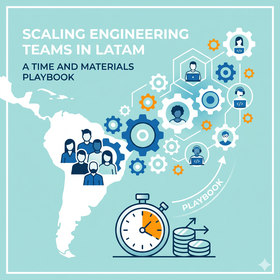
Scaling engineering teams in LATAM has evolved from a simple cost-reduction tactic into a strategic necessity for product organizations facing severe domestic talent shortages. However, many technology leaders struggle with volatile product roadmaps, prolonged onboarding timelines, and rigid contract structures that stifle innovation. Failing to align team expansion with flexible procurement models directly degrades engineering velocity and inflates technical debt. This playbook delivers a operational framework using Time and Materials (T&M) structures to build highly adaptable, high-performing engineering hubs in Latin America that integrate seamlessly with your core product operations.
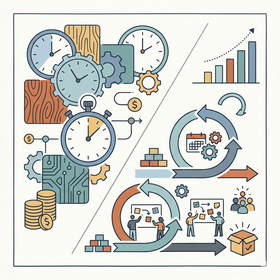
Organizations shifting to Agile product development often struggle to balance budget predictability with operational flexibility when working with external partners. Managing Sprint Cycles in a Time and Materials Engagement presents a unique challenge: the open-ended nature of the billing model can easily lead to unchecked scope creep and financial bleeding if the product backlog is poorly governed. Without a rigid framework that links engineering hours directly to measurable product increments, businesses face escalating burn rates without guaranteed delivery. This article outlines the precise governance, prioritization, and tracking mechanisms required to maintain fiscal discipline while leveraging the creative freedom of adaptive sprint cycles
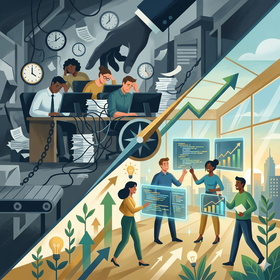
Managing talent continuity in external engineering teams directly impacts product velocity, code quality, and time-to-market. When analyzing Time and Materials vs. Outsourcing retention, product and technology leaders frequently encounter high turnover rates that disrupt sprint cycles and dilute institutional knowledge. Traditional fixed-price outsourcing often incentivizes vendors to optimize for margin over talent satisfaction, resulting in rolling churn that stalls complex product development. Choosing the wrong engagement model creates hidden financial friction, as engineering onboarding cycles consume valuable senior leadership resources and delay core roadmap deliverables.
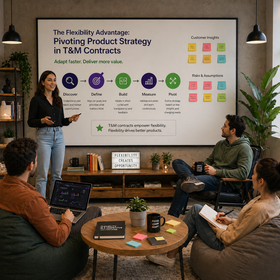
In the high-stakes world of digital product development, the only constant is change. Traditional fixed-scope contracts often act as a straightjacket, preventing teams from responding to market shifts or user feedback discovered during the build. This is where the strategic advantage of Time and Materials (T&M) models becomes apparent, offering the structural freedom necessary for high-growth companies.
Pivoting product strategy in T&M contracts is not merely about changing direction; it is about leveraging financial and operational flexibility to maximize business value. For product leaders, CX directors, and CTOs, understanding how to navigate these pivots is the difference between a failed launch and a market-leading innovation.
This article explores the mechanics of successful strategic shifts within T&M frameworks. We will analyze how to maintain budget discipline while embracing the "pivot," ensuring that every hour billed translates into a tangible step toward product-market fit.