D The Evolution of Design Methodologies: From Waterfall to Agile
Por Redacción Aguayo
Explore the world of empathy maps and discover how this tool can revolutionize your design approach, providing a deep understanding of your audience and enhancing decision-making.

Introduction to Design Methodologies
Design methodologies play a crucial role in creating products and services that meet the needs and expectations of users. These methodologies provide a structured framework to guide the design process, from ideation to implementation and continuous iteration. In this exploratory journey, we will delve into how these methodologies have evolved over time, focusing on the transition from more rigid approaches, such as Waterfall, to more flexible and collaborative methods, such as Agile.
From its inception, design methodologies have sought to optimize the creative process, ensuring the delivery of effective, user-centered solutions. Waterfall, a traditional and sequential approach, has long been the predominant methodology in software development and design. This linear approach involves a step-by-step progression, where each phase of the project must be completed before moving on to the next.
Waterfall: A Traditional Approach
The Waterfall model has been a cornerstone in software development and design for decades. Its linear approach establishes a rigorous sequence of phases, with each depending on the success of the preceding one. A thorough understanding of this traditional approach is essential to appreciate the evolution towards more agile and flexible methods.
Phases of the Waterfall Model:
- Requirements:
- Identification and exhaustive documentation of project requirements.
- Design:
- Detailed creation of system architecture and design based on requirements.
- Implementation:
- Coding of the system according to the specified design.
- Testing:
- Verification that the system functions as intended.
Advantages of Waterfall:
- Clear Structure:
- The linear sequence provides an easily understandable and followable structure.
- Comprehensive Documentation:
- Each phase is thoroughly documented before moving on to the next.
- Change Control:
- Changes are better managed early on, avoiding modifications during the process.
Disadvantages of Waterfall:
- Little Flexibility:
- It does not allow changes once a phase is underway.
- Late Feedback:
- Users and clients see the final product in a late stage, limiting feedback.
- Risk of Failures:
- Errors discovered at the end of the process can be costly and challenging to rectify.
Examples of Waterfall Projects:
- Large Software Developments:
- Projects where requirements are stable and well-understood from the outset.
- Regulated Industries:
- Sectors with strict documentation and compliance requirements.
Challenges and Limitations of the Waterfall Model
While the Waterfall model has been extensively used, it is not without challenges and limitations. Understanding these critical aspects is essential for evaluating its suitability in specific product development and design contexts.
Rigidity in Change:
- The Waterfall model does not easily adapt to changes in requirements during development.
- Rigidity in the process can result in delivering a product that does not fully meet the evolving needs of the user.
Late Feedback:
- Stakeholders and users gain visibility of the final product only in the later stages of the project.
- Lack of early feedback limits the ability to make significant adjustments based on actual user needs.
Risk Management:
- Significant risks often go unidentified until advanced stages.
- Correcting errors discovered late in the process can be costly and time-consuming.
Complexity in Large Projects:
- In extensive projects, managing and coordinating multiple phases can become intricate.
- Complexity increases the likelihood of misunderstandings and communication issues.
Excessive Documentation:
- The need to document each phase thoroughly can result in a heavy workload.
- Excessive documentation may distract from the efficient execution of the project.
The Emergence of Agile Approaches
The traditional paradigm of Waterfall, though effective in certain contexts, began to show limitations as the technology and design industries evolved. This context led to the emergence of agile approaches, marking a significant shift in the philosophy of product development and design.
Need for Adaptability:
- As market demands and user expectations changed rapidly, the need for more adaptable approaches became evident.
- Agile methods stand out for their ability to adjust to continuous changes in requirements and priorities.
Collaborative Philosophy:
- Agile encourages close collaboration among team members and stakeholders.
- Open and continuous communication becomes a cornerstone, allowing for quick adjustments and informed decisions.
Continuous Iteration:
- Unlike the rigidity of the Waterfall model, agile methods advocate for the iterative and continuous delivery of product increments.
- Each iteration allows for the incorporation of early feedback, enhancing the adaptability of the product.
Focus on User Value:
- Agile places significant emphasis on the rapid delivery of tangible value to the user.
- Constant feedback ensures that the product evolves in line with real user needs.
Widespread Adoption:
- As organizations across various sectors adopted agile methods, its ability to improve efficiency, reduce risks, and increase customer satisfaction became evident.
The emergence of agile approaches not only transformed how we design and develop products but also emphasized the importance of adaptability and continuous collaboration. This paradigm shift paved the way for a new era where agile responsiveness to change became a key component of success in product design and development.
Fundamental Principles of Agile Methodologies
Agile methods are based on a set of fundamental principles that guide product development and design in a flexible and collaborative manner. These principles, in contrast to the rigid structures of Waterfall, enable an agile response to changes and the continuous delivery of value to the user.
Individuals and Interactions over Processes and Tools:
- Focus on communication and direct collaboration among team members and stakeholders.
- Value human interaction as key to understanding and addressing changing needs.
Frequent Delivery of Functional Software:
- Prioritize the continuous delivery of functional software increments.
- Allow users to experience and use new features early, facilitating immediate feedback.
Customer Collaboration at All Times:
- Maintain constant collaboration with the customer throughout the development process.
- Ensure that customer requirements are aligned with real expectations and needs.
Positive Response to Change:
- Accept that requirements may change and respond flexibly to these modifications.
- Consider change as an opportunity to improve and adjust the project's direction.
Progress Measured by Functional Software:
- Evaluate project progress based on the functionality of delivered software.
- Foster transparency and visibility of actual progress through regular demonstrations.
Collaborative Work and Team Self-Organization:
- Facilitate team self-organization and promote constant collaboration.
- Allow teams to make decentralized decisions to quickly adapt to changing demands.
Sustainable Working Environment:
- Value a sustainable pace of work over time.
- Avoid team fatigue and promote an environment that fosters creativity and sustainable productivity.
These fundamental principles not only define the philosophy of agile methods but also serve as practical guidance for creating products that effectively adapt to the changing needs of the market and users.
Benefits of Adopting Agile Methodologies
The adoption of agile methodologies brings a series of significant benefits that go beyond simply changing the development approach. These benefits positively impact team efficiency, product quality, and customer satisfaction.
Rapid and Continuous Delivery of Value:
- Iterative delivery allows for the quick implementation of valuable features for the user.
- Users experience tangible value earlier in the development process.
Increased Flexibility and Adaptability:
- Responsiveness to changes in requirements allows for continuous adjustments in the product.
- Inherent flexibility facilitates adaptation to market dynamics and user expectations.
Improved Communication and Collaboration:
- The collaborative philosophy fosters open and continuous communication among team members and stakeholders.
- Misunderstandings are minimized, and a shared understanding of project goals is promoted.
Reduction of Risks and Errors:
- Frequent delivery enables early identification of potential issues.
- Error correction is more agile and less costly when addressed in early stages.
Higher Customer Satisfaction:
- Continuous adaptation based on customer feedback leads to products that better align with their needs.
- Constant delivery of value contributes to a positive customer experience.
Increased Team Motivation and Productivity:
- Team self-organization and a sustainable pace of work foster a motivating environment.
- Agile teams tend to be more engaged and productive.
Greater Visibility and Project Control:
- Regular demonstrations provide a clear view of project progress.
- Teams and stakeholders have a transparent understanding of goals and challenges.
The adoption of agile methodologies not only transforms how we create products but also drives a culture of continuous improvement. By embracing flexibility, collaboration, and constant delivery of value, organizations can optimally position themselves to face the changing challenges of the business environment and effectively meet user expectations.*
Stages of the Agile Lifecycle
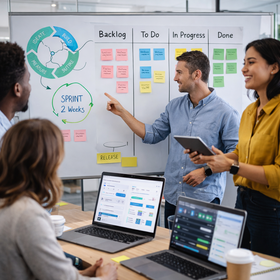
The agile lifecycle consists of a series of interconnected stages, each designed to serve a specific purpose and contribute to the iterative and collaborative development of a product. These stages provide a solid framework for planning, execution, and continuous improvement throughout the project lifecycle.
Planning:
- Goal Definition:
- Clear establishment of project objectives and customer expectations.
- Product Backlog Creation:
- Identification and prioritization of necessary features and tasks.
Iteration:
- Iteration Planning:
- Selection of backlog items for the upcoming iteration.
- Development and Testing:
- Implementation of selected features and associated testing.
Review and Retrospective:
- Iteration Review:
- Demonstration of completed functionalities to the customer.
- Team Retrospective:
- Internal assessment to identify improvements and adjustments.
Delivery and Evaluation:
- Product Deployment:
- Production deployment of completed functionalities.
- Continuous Evaluation:
- Obtaining customer feedback and adjusting planning as needed.
Continuous Improvement:
- Backlog Adaptation:
- Updating the product backlog based on experience and customer feedback.
- Cycle Iteration:
- Repeating the stages to continually refine and improve the product.
Project Closure:
- Final Documentation:
- Creation of the project's final documentation.
- Lessons Learned:
- Reflection on successes and challenges for future projects.
The agile lifecycle is characterized by its iterative nature and continuous responsiveness to changing project conditions and customer needs. These stages provide a framework that allows teams to adapt efficiently, continually improve, and deliver products that effectively meet user expectations.
Challenges in Implementing Agile Methodologies
While the adoption of agile methodologies can provide numerous benefits, it is not without challenges. Identifying and addressing these challenges is crucial to ensure a smooth transition and successful implementation of agile approaches in product development and design.
Resistance to Change:
- Cultural Change:
- Transitioning to agile methodologies often involves a significant cultural shift.
- Resistance to change may arise from comfort with traditional methods and a lack of understanding of agile benefits.
Time and Resource Management:
- Initial Planning:
- Agile planning may require more time and effort initially to establish the backlog and processes.
- Continuous Learning:
- The learning curve for teams new to agile methodologies can impact initial development speed.
Communication and Collaboration:
- Communication Challenges:
- Open and continuous communication is crucial in agile methodologies but can be a challenge in dispersed or large team environments.
- Interdisciplinary Collaboration:
- Close collaboration between different disciplines may require a mindset and practice shift.
Priority Setting:
- Prioritized Backlog:
- Proper backlog prioritization is essential for agile success.
- Lack of clarity in priorities can lead to less effective deliveries.
Scalability:
- Adaptation to Large Projects:
- Implementing agile methodologies in large projects may require adjustments and appropriate scalability.
- Coordination between teams can be more complex.
Lack of Agile Experience:
- Training Needed:
- Teams without agile experience may require additional training.
- Lack of knowledge can lead to misunderstandings and inefficient practices.
Measurement of Success:
- Clear Indicators:
- Defining and measuring success in agile methodologies can be subjective.
- Lack of clear indicators can make it challenging to assess progress and team effectiveness.
Facing these challenges with a well-planned strategy, adequate training, and ongoing commitment is essential to overcome barriers in the implementation of agile methodologies and maximize long-term benefits.
The Path to Continuous Evolution
The evolution of design and development methodologies, from traditional approaches to the widespread adoption of agile methodologies, represents a constant journey towards continuous improvement. This paradigm shift not only reflects an adaptation to changing market demands but also a response to the need for creating more effective and user-centered products.
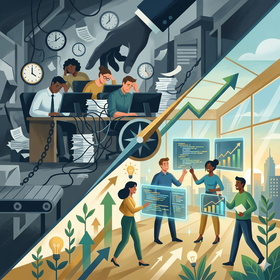
The transition from linear models like Waterfall to agile approaches has not only transformed how teams work but has also redefined the relationship between developers, designers, and, most crucially, end users. The incorporation of agile principles, such as continuous delivery of value and adaptability to changes, has allowed organizations not only to survive in dynamic business environments but thrive in them.
When implementing agile methodologies, it is crucial to recognize and address inherent challenges, from resistance to change to efficient resource management and effective communication. The key lies in understanding that the adoption of agile approaches is not merely a transition of processes but a cultural change that drives innovation, collaboration, and the delivery of quality products.
Ultimately, the path to continuous evolution involves a constant commitment to improvement, adaptability, and the pursuit of innovative ways to address challenges. The agile revolution has proven to be more than a methodology: it is a philosophy that guides teams and organizations toward a future where agility and effectiveness go hand in hand.