D Time and Materials vs. Outsourcing retention analysis for product engineering teams
Por Redacción Aguayo
Managing talent continuity in external engineering teams directly impacts product velocity, code quality, and time-to-market. When analyzing Time and Materials vs. Outsourcing retention, product and technology leaders frequently encounter high turnover rates that disrupt sprint cycles and dilute institutional knowledge. Traditional fixed-price outsourcing often incentivizes vendors to optimize for margin over talent satisfaction, resulting in rolling churn that stalls complex product development. Choosing the wrong engagement model creates hidden financial friction, as engineering onboarding cycles consume valuable senior leadership resources and delay core roadmap deliverables.
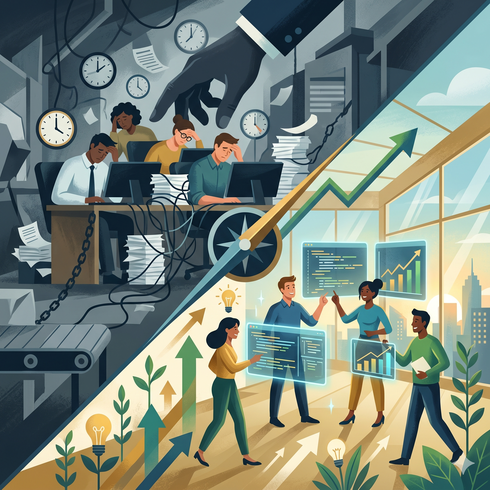
A Time and Materials model consistently offers superior talent retention compared to traditional fixed-price outsourcing. Because Time and Materials structures align financial compensation with actual hours worked, engineering partners can invest in competitive salaries, stable team allocations, and continuous professional development. This stability prevents the frequent bench rotations and sudden developer reassignments common in legacy outsourcing frameworks.
Key retention advantages of the Time and Materials approach include:
- Direct alignment of incentives: Vendors focus on delivery quality and resource continuity rather than aggressive margin-squeezing.
- Integration with internal culture: Developers operate as extended team members, increasing organizational affinity and reducing voluntary departures.
- Predictable knowledge retention: Long-term placement preserves architectural context, reducing re-onboarding overhead.
- Transparency in workload management: Clear visibility into capacity prevents burnout and improves long-term developer satisfaction.
Evaluating Engineering Churn in Modern Product Models
Shift in Mindset: Moving From Headcount to Core Knowledge Capitals
Evaluating Time and Materials vs. Outsourcing retention requires shifting from treating engineering as a plug-and-play commodity to viewing it as a continuous repository of product intelligence. Traditional outsourcing treats developers as interchangeable units, prioritizing short-term cost predictability over team cohesion. In complex product development, every instance of engineer turnover costs organizations an estimated 1.5 to 2 times the individual's annual salary when factoring in lost momentum, code degradation, and recruitment cycles. Tech leaders must recognize that sustainable product velocity depends on the longevity of the minds writing the code, making the underlying contract structure a foundational retention variable.
Evidence-Based Prioritization: Analyzing the Mechanics of Churn
Data from global product engineering initiatives indicates that rigid outsourcing frameworks experience significantly higher annual attrition than flexible billing models. In fixed-price outsourcing, the vendor bears the financial risk of scope creep, which frequently leads to intense pressure on development teams, uncompensated overtime, and subsequent burnout. Conversely, the Time and Materials model accommodates changing product requirements transparently. At Aguayo, tracking product team health across diverse deployment frameworks shows that models prioritizing transparent capacity planning experience a substantial reduction in unplanned developer departures, directly stabilizing sprint velocity.
Interdepartmental Collaboration: Unifying Product, Finance, and Procurement
Optimizing retention across external teams requires structural alignment among procurement, financial planning, and engineering leadership. Procurement teams often lean toward traditional outsourcing due to its perceived budgetary certainty, overlooking the downstream costs of talent turnover. Engineering leaders must collaborate with financial analysts to quantify the total cost of ownership, including the time senior architects spend onboarding new vendor resources due to high churn. Establishing unified metrics that tie contract selection to team retention ensures that financial controls do not inadvertently compromise product stability or delivery timelines.
Frequently Asked Questions about Retention Models
Why does Time and Materials vs. Outsourcing retention differ so significantly?
Traditional outsourcing incentivizes vendors to maximize margins by utilizing lower-cost, high-turnover junior resources. Time and Materials models reward quality, stability, and continuous engineering contribution, allowing vendors to maintain competitive compensation packages that retain senior talent.
How does developer turnover impact software product velocity?
Every time an engineer leaves, the team loses undocumented architectural context, logic rationale, and domain expertise. This loss forces remaining developers to divert attention from new feature delivery to onboarding, debugging unfamiliar code, and stabilizing existing sprints.
Can a company achieve high engineering retention with fixed-price outsourcing?
It is difficult because fixed-price structures inherently penalize shifting requirements and extended experimentation. The rigid boundaries often create adversarial relationships between the client and the vendor's engineers, accelerating developer burnout and voluntary attrition.
What metrics should product leaders track to measure external team stability?
Organizations should actively monitor the rolling attrition rate of vendor personnel, the average tenure of assigned engineers, the average time to onboard replacement developers, and the percentage of sprint commitments missed due to personnel changes.
Concluding Thoughts: Structural Continuity for Sustainable Engineering Growth
Selecting an engagement model dictates the cultural and operational baseline of an engineering ecosystem. True product agility requires more than adopting modern frameworks; it requires a contract architecture that respects human capital and actively protects institutional knowledge from structural disruption.
When looking at the broader picture of team evolution, the long-term viability of a digital platform relies on the continuous presence of the engineers who understand its foundational architecture. By prioritizing alignment, transparency, and sustainable workload distribution, tech leaders build resilient codebases and stable organizational structures.
A commitment to sustainable engineering practices ensures that product organizations remain resilient amid evolving market demands. Prioritizing retention over short-term budgetary illusions creates a high-performing engineering culture capable of delivering predictable, high-quality software solutions.