D Product Designer vs Product Manager: Differences, Similarities, and their Influence on User Experience
Por Redacción Aguayo
Explore the differences, similarities, and their influence on user experience between the Product Designer and the Product Manager in digital product development.

Introduction to Roles in Product Development
In the realm of product development, two crucial roles are the Product Designer and the Product Manager. Both play distinct but complementary functions, each with its unique focus and responsibilities. To fully grasp how these roles interact and contribute to user experience (UX), it is essential to explore their characteristics, differences, and similarities.
In the digital product design and management landscape, roles have become increasingly specialized, reflecting the complexity of modern product development processes. Among these roles, two stand out: the Product Designer and the Product Manager. These professionals play pivotal roles in shaping the user experience (UX) and often collaborate closely to ensure products meet user needs and expectations.
Functions and Responsibilities of the Product Designer
The Product Designer plays a pivotal role in digital product development, being responsible for crafting intuitive and engaging user experiences. Their responsibilities include conceptualizing, designing, and prototyping user interfaces, as well as collaborating with multidisciplinary teams to ensure the coherence and usability of the final product. Additionally, the Product Designer must stay abreast of design and technology trends, as well as user needs and preferences, to create innovative solutions that meet their requirements.
The Product Designer is tasked with turning ideas and concepts into functional and aesthetically pleasing user interfaces. This involves working closely with other team members, such as software engineers and user experience (UX) designers, to understand project requirements and translate them into tangible designs. Furthermore, the Product Designer must conduct usability testing and gather user feedback to iterate and continuously improve the product design.
In summary, the Product Designer plays a crucial role in crafting successful digital products, blending creative and technical skills to design memorable and effective user experiences.
The Role of the Product Manager in the Product Development Cycle
The Product Manager plays a crucial role in the product development cycle, acting as the primary advocate for the product and leading its strategy from conception to delivery. Their main responsibility is to ensure that the product meets market and user needs while aligning with business objectives.
The Product Manager is responsible for defining the product vision and strategy, identifying market opportunities, and defining key features and functionalities that will differentiate it from competitors. Additionally, they work closely with development, design, and marketing teams to ensure successful product execution.
Throughout the development cycle, the Product Manager serves as the focal point for decision-making, prioritizing product features and functionalities based on their impact on users and overall product success. They are also responsible for managing the project budget, overseeing the release schedule, and communicating product progress to stakeholders.
In summary, the Product Manager plays a crucial role in the product development cycle, leading strategy and execution to ensure the product's success in the market.
Collaboration between Product Designer and Product Manager
The collaboration between the Product Designer and the Product Manager is essential for the success of a product. Both roles have unique skills and perspectives that complement each other, and working together effectively can lead to an exceptional user experience and a successful product in the market.
Firstly, the Product Designer and the Product Manager share the common goal of creating a product that meets user needs and fulfills business objectives. The Product Manager brings a deep understanding of the market and customer needs, while the Product Designer brings user-centered design skills to transform those needs into intuitive and appealing solutions.
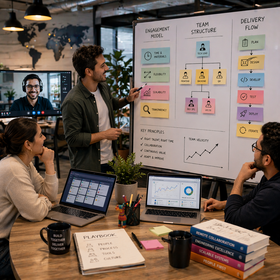
The collaboration between these two roles begins from the early stages of the product development process. The Product Manager and the Product Designer work together to define the product vision and strategy, identify market opportunities, and understand user needs and desires. This early collaboration is crucial to establish a solid foundation for product design and development.
As the development process progresses, the collaboration between the Product Designer and the Product Manager remains critical. The Product Manager provides guidance on product requirements and priorities, while the Product Designer uses this information to create meaningful and effective user experiences. Working together in this way ensures that the final product is not only viable from a business standpoint but also desirable and usable for end users.
Furthermore, the collaboration between the Product Designer and the Product Manager fosters communication and idea exchange among design and development teams. This facilitates problem-solving and informed decision-making throughout the product development process.
In summary, effective collaboration between the Product Designer and the Product Manager is essential for creating successful products that meet the needs of the market and users.
User Experience Focus: Product Designer Perspective
As a Product Designer, one's focus on user experience (UX) remains pivotal throughout the product design journey. UX, referring to how users engage with a product or service, becomes the primary concern. The objective is to ensure that this interaction remains seamless, intuitive, and gratifying. Various user-centered methodologies and practices shape this approach from inception to the final product's realization.
Understanding the User: The initial step involves gaining a comprehensive understanding of the end users - their needs, desires, and behaviors. This is achieved through user research methodologies such as interviews, surveys, and usability testing. These methods yield valuable insights into user preferences and expectations.
User-Centered Design: User-centered design serves as the guiding framework for crafting solutions that resonate with user needs and objectives. It entails the creation of prototypes and mockups to test and validate design concepts before implementation, facilitating the identification and resolution of potential usability issues.
Usability and Accessibility: Ensuring ease of use and accessibility for all users, irrespective of abilities or disabilities, is paramount. This encompasses ensuring clear and intuitive navigation, providing immediate feedback on user actions, and adhering to accessibility standards to ensure usability for individuals with disabilities.
Iteration and Continuous Improvement: Acknowledging that the design process is iterative, there is a perpetual drive for enhancement and refinement of the user experience. Leveraging user feedback and analytics data, continuous iterations refine the design, ensuring ongoing improvements that enhance the user experience over time.
In summary, the focus of a Product Designer revolves around comprehending and fulfilling user needs through user-centered design, usability, and accessibility. Embracing this approach facilitates the creation of products that are not only visually appealing but also functional and effective in meeting user requirements.
Balancing Business Needs and User Experience: Product Manager Perspective
As a Product Manager, their role involves balancing the needs and objectives of the business with user experience to ensure product success. This duality between market demands and user expectations presents a constant challenge that requires a strategic and balanced approach. Here, we'll explore how they address this task from the perspective of the Product Manager.
Understanding Business Needs: Their first responsibility is to understand the goals and objectives of the business. This involves working closely with stakeholders to identify business priorities, define product requirements, and establish clear success metrics.
Market and Competitor Analysis: They conduct thorough market and competitor analysis to understand the competitive landscape and existing opportunities. This allows them to identify market trends, customer unmet needs, and areas of opportunity to differentiate their product.
Integration of User Experience: While business needs are important, they also recognize the critical importance of user experience. They work closely with the design and development team to integrate user needs at all stages of the product development process.
Prioritization and Decision Making: One of their most important tasks is prioritizing product features and functionalities based on their impact on both the business and user experience. This involves making tough decisions and often compromises between business demands and user expectations.
Iteration and Continuous Improvement: Like in user-centered design, the product development process never ends. They use market data and feedback to iterate on the product and make continuous improvements that meet both business needs and user expectations.
In summary, their approach as a Product Manager involves balancing business needs with user experience to create successful and satisfying products. This involves understanding business priorities, integrating the user voice into the development process, and making strategic decisions that benefit both the business and users.
User-Centered Product Development: Role Integration
User-centered product development is a fundamental approach to ensuring that products meet the needs and expectations of end users. In this chapter, we will explore how the roles of Product Designer and Product Manager are integrated in this process to create user-centered products.
Collaboration from the Start: From the early stages of the development process, both the Product Designer and the Product Manager collaborate closely to understand user needs and establish the product vision. This involves conducting user research, defining personas and use cases, and setting clear goals for the user experience.
Definition of Requirements and Priorities: The Product Manager works with the design team to define product requirements and establish priorities based on business needs and user expectations. This collaboration ensures that the team is aligned on product goals and key features to be developed.
Iterative Design: The Product Designer uses user feedback and usability testing to iterate on the product design and continuously improve the user experience. This constant iteration allows the team to adjust and enhance the product design based on user needs and preferences.
Agile Development: Both the Product Designer and the Product Manager participate in agile development processes, where rapid and frequent iterations enable continuous delivery and ongoing product improvement. This facilitates adaptation to changes in user needs and the market, ensuring that the final product meets user expectations.
Testing and Validation: Before product launch, the team conducts thorough testing to validate the design and functionality of the product. This includes usability testing, performance testing, and user acceptance testing to ensure that the product meets quality standards and satisfies end user needs.
In summary, the integration of roles between the Product Designer and the Product Manager is critical for user-centered product development. This collaboration ensures that the final product not only meets business needs but also provides a satisfying and meaningful user experience.
Key Differences in Methodologies and Work Approaches
The differences between the methodologies and work approaches of the Product Designer and the Product Manager are crucial to understand how these roles complement and collaborate in product development. Although both share the goal of creating successful products, their approaches and responsibilities differ significantly.
Perspective and Approach: The Product Designer primarily focuses on user experience and designing intuitive and visually appealing interfaces. Their approach is oriented towards solving design problems and creating solutions that are visually attractive and functional. On the other hand, the Product Manager takes a broader perspective, caring about product feasibility, business strategy, and alignment with business objectives.
Key Responsibilities: The responsibilities of the Product Designer include conceptualizing and creating user interfaces, designing workflows, and prototyping. They work closely with development teams and users to ensure that the final product meets user needs and expectations. Conversely, the Product Manager is responsible for defining the product vision, setting priorities, and leading the team towards achieving product and business goals.
Work Methodologies: The Product Designer typically works with design-focused methodologies such as User-Centered Design (UCD) or Design Thinking, which focus on understanding user needs and designing solutions to meet them. On the other hand, the Product Manager may adopt agile methodologies such as Scrum or Kanban, which focus on rapid delivery and continuous adaptation to market changes.
Collaboration and Communication: Despite these differences, effective collaboration between the Product Designer and the Product Manager is essential for product success. Both roles must communicate clearly and regularly, share information and feedback, and work together to make informed decisions that benefit the product and end users.
In summary, the differences in methodologies and work approaches of the Product Designer and the Product Manager reflect their unique responsibilities and complementary perspectives in product development. Effective collaboration between these roles is essential for creating successful products that meet user needs and business objectives.
The Future of Collaboration between Product Designer and Product Manager
The collaboration between Product Designers and Product Managers is crucial for the success of any digital product. As the field of user experience (UX) evolves and becomes more complex, the importance of effective collaboration between these two roles becomes even more apparent. The future of this collaboration promises innovation, integration, and an even more user-centered approach.
Integration of Roles: In the future, we are likely to see greater integration between the roles of Product Designer and Product Manager. This means that professionals in these fields will work more closely together from the early stages of product development to its launch and beyond. This integration can lead to a deeper understanding of user needs and the creation of more effective, user-centered products.
Emerging Technology: With the emergence of new technologies such as artificial intelligence (AI), augmented reality (AR), and the Internet of Things (IoT), Product Designers and Product Managers will need to collaborate to explore how these technologies can be effectively integrated into products to enhance the user experience. This collaboration will enable the creation of more innovative products tailored to the changing needs and expectations of users.
Focus on Sustainability and Ethics: In the future, there is likely to be a greater focus on sustainability and ethics in the design of digital products. Product Designers and Product Managers will work together to ensure that products are ethical, environmentally friendly, and socially responsible. This may involve making conscious decisions about data usage, inclusion and diversity, and the environmental impact of products.
Agility and Adaptability: In an increasingly changing and competitive business environment, agility and adaptability will be key. Product Designers and Product Managers will need to collaborate more closely to respond quickly to changes in the market, emerging trends, and user needs. This may involve adopting more advanced agile methodologies and creating highly collaborative, multidisciplinary teams.
Education and Professional Development: As collaboration between Product Designers and Product Managers becomes more integral, we are likely to see a greater emphasis on education and professional development in both fields. This may include training and certification programs that specifically address the skills needed for effective collaboration, as well as opportunities for continuous learning to stay up-to-date with the latest trends and technologies in the field of user experience.
In summary, the future of collaboration between Product Designers and Product Managers is exciting and promising. As these roles continue to evolve and adapt to an ever-changing business environment, effective collaboration between them will become even more crucial for the success of digital products.