D Lean UX: Redefining User Experience Strategy
Por Redacción Aguayo
Explore Lean UX methodology in-depth based on the book by Jeff Gothelf and Josh Seiden. Discover its core principles, benefits, implementation process, and how it compares to other design methodologies. Learn when and who should use Lean UX to enhance user experience strategy.

What is Lean UX?
Lean UX is much more than a design methodology; it's a philosophy that has revolutionized how design teams approach user experience strategy. Based on the book of the same name written by Jeff Gothelf and Josh Seiden, Lean UX focuses on collaboration, iteration, and delivering value as core principles for designing successful products. In this article, we will delve deep into the key concepts of Lean UX, its benefits, how it's implemented, and how it compares to other design methodologies.
This is a methodology derived from the Lean movement, originally developed in manufacturing and later successfully applied to software development. Its primary focus is on optimizing the design process by emphasizing waste elimination and efficient delivery of value to the user. Lean UX promotes collaboration among designers, developers, and stakeholders, continuous iteration, and validation with real users. It's about agile design, adapting to changing needs, and delivering products that users love.
Benefits of Lean UX
Lean UX offers a wide range of benefits that have a positive impact on the design process and the final product outcome. These benefits are crucial to understanding why this methodology has become so influential in the user experience design and development industry:
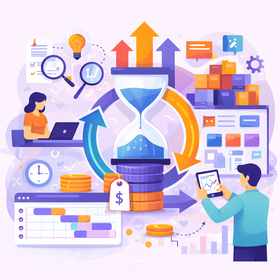
- Time and Resource Savings: One of the most apparent benefits of Lean UX is its ability to save time and resources. By focusing on rapid prototyping and experiments, teams can identify issues and make improvements in the early stages of the design process. This avoids the need for costly corrections and complete redesigns after product launch. The efficiency of Lean UX is particularly valuable in a rapidly changing business environment and in today's fast-paced economy.
- Enhanced User Experience: The essence of Lean UX lies in understanding and fulfilling user needs and expectations. By involving real users in the design process from the outset, Lean UX ensures that the final product aligns with what users want and need. This results in a more satisfying and higher-quality user experience. Products designed with Lean UX tend to be more intuitive, useful, and effective.
- Validation and Continuous Learning: Lean UX promotes continuous validation of ideas and designs. The methodology is based on building prototypes and experiments that are tested with real users. This early and ongoing validation allows teams to learn continuously and improve their designs based on real data rather than assumptions or guesses. This mindset of continuous learning is essential for maintaining relevance and effectiveness in a constantly changing market.
- Risk Reduction: By focusing on early and continuous validation, Lean UX helps to reduce significant risks. Teams can identify and address critical issues before they become insurmountable obstacles. Furthermore, Lean UX's emphasis on interdisciplinary collaboration means teams can tap into a wide range of perspectives and expertise, often leading to more robust and resilient solutions.
- Beyond Design: While Lean UX is particularly effective in digital product design, its philosophy of collaboration, validation, and continuous learning is applicable in various contexts. This methodology can influence an organization's culture, fostering a more agile, user-centered, and value-driven approach. Therefore, the benefits of Lean UX can extend beyond product design and influence how businesses approach innovation and continuous improvement
Methodology of Lean UX
Lean UX is based on a set of interconnected principles and methods that emphasize agility, collaboration, and continuous learning. These are the key aspects of the methodology:
- Collaborative and Interdisciplinary Design: Lean UX promotes collaboration at all times. Multidisciplinary teams, including designers, developers, marketing specialists, and others, work together instead of operating in silos. This collaborative approach ensures a variety of perspectives and skills, leading to more comprehensive solutions.
- Hypotheses and Experiments: Instead of relying on untested assumptions, Lean UX is based on hypotheses. Teams formulate clear statements about what they believe to be true and then design experiments to validate or refute those hypotheses. This ensures that decisions are made based on real data and results.
- Rapid Prototyping: Prototypes are a fundamental part of Lean UX. Teams create rapid and cost-effective prototypes representing possible solutions. These prototypes are used to test and validate ideas with real users. Prototyping focuses on speed and rapid iteration.
- Continuous Testing: Instead of conducting isolated tests at the end of the process, Lean UX advocates for continuous testing. Teams regularly test ideas, prototypes, and designs and obtain real-time feedback. This allows for constant adjustments and improvements.
- Measurement of Results: Lean UX teams use metrics to evaluate the performance and effectiveness of their designs. This ensures that improvements are based on quantitative and qualitative data, not personal opinions.
- Feedback Loops: Lean UX emphasizes continuous feedback from users, team members, and other stakeholders. Feedback loops enable adjustments and refinements as the design process progresses.
- Continuous Value Delivery: The ultimate goal of Lean UX is the continuous delivery of value to the user. Instead of seeking a "perfect" final version of the product, this methodology focuses on delivering value quickly and continuously improving.
- Ceaseless Iteration: Iteration is a key component of Lean UX. Teams keep iterating and improving their designs based on feedback and results. This cycle of continuous improvement is essential to stay agile and relevant.
- Adaptability: Lean UX acknowledges that circumstances can change rapidly. Teams must be willing to adapt and adjust their approach as needed.
When to Use Lean UX?
The Lean UX methodology is versatile and can be applied in various situations throughout the product and service development cycle. Here are specific scenarios in which it is beneficial to use Lean UX:
- Development of New Products or Services: When starting from scratch with a new product or service, Lean UX is especially valuable. It allows teams to quickly explore and validate ideas and concepts without the need for a significant investment in development.
- When Agility is Required: If your organization values the ability to respond rapidly to changes and market needs, Lean UX is a wise choice. The methodology enables fast iterations and agile adaptations as new information is gained.
- In Uncertain Situations: When the future is uncertain, and there are many unknowns, Lean UX provides a practical approach. Hypotheses can be tested and validated, reducing risk before committing to a more rigid approach.
- For Startups and Emerging Businesses: Startups and emerging businesses often operate with limited resources. Lean UX is a smart option as it allows experimentation and iteration without requiring significant investments.
- In Projects with Tight Timelines: When time is of the essence, Lean UX offers an efficient approach. Teams can design, test, and adjust quickly without extending delivery timelines.
- For Optimization Projects: If you already have a product or service in operation and want to make improvements, Lean UX is useful. It allows for concept testing and adjustments without disrupting the existing flow.
- In Innovation-Focused Companies: Organizations continuously seeking innovation and staying at the forefront can benefit from Lean UX. It facilitates the exploration of new ideas and the validation of innovative solutions.
- For Multidisciplinary Projects: Lean UX is ideal when multidisciplinary teams are working together. Collaboration among designers, developers, and other team members is facilitated by this methodology.
- In Resource-Constrained Projects: When resources are scarce, Lean UX is a sensible choice. Teams can focus on the most promising solutions and avoid unnecessary expenses on unvalidated ideas.
- In Projects Requiring Rapid Feedback: If you need to obtain quick feedback from users and stakeholders, Lean UX is highly effective. Prototypes and experiments enable early feedback.
- In Projects Benefiting from Hypothesis Validation: Lean UX is ideal when hypotheses need to be tested and validated before proceeding. This is common in projects with a high degree of uncertainty.
Who Should Implement Lean UX?
The successful implementation of Lean UX heavily relies on who is involved in the process. Here's a description of key roles that should consider adopting this methodology:
- User Experience (UX) Design Teams: UX designers are a crucial component in the implementation of Lean UX. They are responsible for creating prototypes, usability testing, and validating design concepts. Their focus is on ensuring an effective and satisfying user experience.
- Developers: Development teams are critical partners in implementing Lean UX. They collaborate with designers and work on building functional prototypes and experiments. Their technical expertise is essential for conducting realistic testing and creating viable solutions.
- User Researchers: User researchers play a vital role in the Lean UX methodology. They are responsible for identifying key stakeholders and users, collecting data, facilitating usability tests, and understanding user needs and behaviors.
- Product Managers: Product managers are involved in defining objectives, prioritizing features, and making strategic decisions. Their contribution is important to ensure that Lean UX aligns with business and product goals.
- Project Leaders and Scrum Masters: In agile environments, project leaders and Scrum Masters play a crucial role in coordinating and facilitating processes. They help ensure that teams stay focused on Lean UX objectives and remove obstacles.
- Multidisciplinary Teams: Lean UX promotes collaboration and ongoing communication among multidisciplinary teams. This includes designers, developers, researchers, and other experts working together to achieve design and business goals.
- Users and Stakeholders: Users and stakeholders play an essential role in Lean UX. They provide feedback, test prototypes, and validate solutions. Their active participation is fundamental to the methodology's success.
- Marketing and Sales Teams: Marketing and sales teams can benefit from Lean UX by understanding customer needs and the effectiveness of proposed solutions. Their feedback and market knowledge are valuable.
- Senior Management: Senior management can drive the adoption of Lean UX by supporting investments in resources, time, and training. Their support is essential for creating a culture of innovation and continuous learning.
- User Experience Consulting Firms: Specialized user experience consulting firms often offer Lean UX services to other organizations. They provide expertise and guidance to effectively implement the methodology.
Lean UX: The Evolution of User Experience Design
Lean UX represents a significant evolution in how organizations approach user experience design. This methodology combines the essence of Lean and Agile principles with a user-centered focus to deliver products and services that efficiently and effectively meet market needs.
By adopting Lean UX, companies embrace a culture of continuous learning, where the design process relies on constant validation and rapid iteration. Some of the standout benefits include the ability to save time and resources by identifying issues in the early stages, enhancing the user experience by involving real users from the outset, and validating design concepts before launch.
This methodology also stands out for its adaptability to agile environments, enabling teams to iterate quickly and stay focused on results. Lean UX promotes interdisciplinary collaboration and constant communication, which is essential for effectively addressing design and business challenges.
Ultimately, Lean UX not only redefines the user experience strategy but also redefines how organizations engage with their users and customers. Adopting this methodology not only improves products and services but also fosters a user-centered mindset and a continuous focus on innovation and excellence in user experience. As organizations seek to remain competitive in an ever-evolving market, Lean UX emerges as a fundamental methodology that drives long-term success.