D Growth Marketing vs Growth Design: Unpacking Strategies for Business Expansion
Por Redacción Aguayo
Explore key strategies driving business expansion, unraveling the differences between Growth Marketing and Growth Design, and how they can collaborate for effective growth.

Expansion Strategies
Business expansion is an exciting and often intricate challenge that requires effective strategies. In this introductory chapter, we will dive into the fascinating world of Growth Marketing and Growth Design, exploring their fundamental roles in business expansion.
Growth Marketing: The Driving Force behind Business Growth
Growth marketing is not just a tactic but a comprehensive philosophy that drives decision-making in all areas of the business. From customer acquisition to retention, Growth Marketing focuses on the customer lifecycle, seeking opportunities to drive growth sustainably.
Growth Design: Beyond Aesthetics
On the other hand, Growth Design goes beyond the aesthetics of design. It is about creating meaningful, user-centered experiences that yield tangible results. Collaboration between marketing and design becomes essential to align the vision, from conceptualization to implementation.
The Nuance of Collaboration
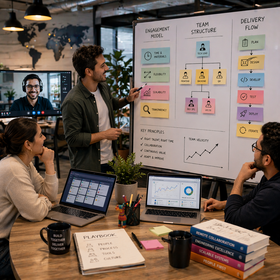
The synergy between Growth Marketing and Growth Design becomes the heart of our explorations. Both disciplines not only coexist but also mutually enhance each other. On this journey, we will examine how these strategies can work in harmony to unlock the true potential of business expansion.
Growth Marketing Fundamentals
At the core of business growth lies Growth Marketing, a dynamic discipline that goes beyond conventional marketing strategies. In this chapter, we will explore the essential fundamentals of Growth Marketing.
Customer-Centric Approach
One of the foundational pillars of Growth Marketing is a customer-centric approach. Beyond merely selling a product, it is about understanding the needs and desires of the customer at each stage of their journey. Personalization and empathy are key to building lasting relationships.
Data and Analytics
Growth Marketing thrives on data and analytics. Every campaign, every interaction becomes a source of valuable information. From conversion analysis to tracking user behavior, informed decision-making drives growth.
Continuous Experimentation
The mindset of continuous experimentation is another pillar. The willingness to try out new ideas, measure results, and learn from each experience is crucial. Failure is seen as a learning opportunity, and the iterative process drives constant improvements.
Funnel Optimization
The conversion funnel is a central element. From awareness to conversion, each stage is optimized to maximize efficiency. Understanding friction points and implementing incremental improvements are essential.
The Role of Design in Business Growth
In the landscape of business growth, design plays a crucial role that goes beyond aesthetics. We will explore how design can power growth strategies and add significant value to user experiences.
Elevating User Experience
User-centered design is not just about making something look good but about how it feels and functions. Improving user experience is essential for retaining customers and fostering loyalty. Every interaction should be intuitive, engaging, and aligned with user expectations.
The Importance of Visual Cohesion
Visual cohesion strengthens the brand identity and creates a memorable impression. From the logo to product design and user interface, maintaining a consistent aesthetic contributes to brand recognizability and trust.
Responsive Design and Accessibility
In a diverse digital world, responsive design and accessibility are imperatives. Ensuring that the experience is consistent across different devices and accessible to all users, regardless of their abilities, expands reach and effectiveness.
Facilitating Communication
Effective design facilitates communication. Whether through clear graphics, intuitive interfaces, or visual strategies, design plays a fundamental role in conveying messages effectively, directly impacting brand perception.
Points of Convergence and Divergence
At the intersection between growth marketing and growth design, crucial points of convergence and divergence emerge. Let's analyze how these two disciplines complement each other and, at the same time, how they differ in their approaches and goals.
Strategic Convergence
- User-Centric Focus: Both growth marketing and growth design share a user-centric approach. Both disciplines seek to understand user needs and expectations to provide more meaningful experiences.
- Continuous Optimization: Constant optimization is a key convergence. Both marketing and design teams aim to continually improve, whether in terms of conversions (marketing) or user experience (design).
- Data as Drivers: Both fields use data to drive their decisions. From behavioral analysis to A/B testing, data collection and analysis are crucial for making informed decisions.
Divergence in Approaches
- Specific Goals: While growth marketing focuses on customer acquisition and retention, growth design aims to enhance user experience through user-centered design.
- Focused Channels: Marketing can use a variety of channels, from social media to email campaigns. Design, on the other hand, focuses on the user interface, product aesthetics, and usability.
- Different Success Metrics: Success metrics vary; marketing may measure ROI and conversions, while design may measure user satisfaction and usability.
Integration for Optimal Growth
The key lies in the effective integration of these disciplines. By aligning strategies, sharing data, and collaborating in decision-making, organizations can achieve more balanced and user-centered growth.
Illustrative Case Studies
These practical examples offer valuable insights into how both disciplines can collaborate to achieve impactful results.
- Audience Expansion through Content Strategies
Challenge: An e-commerce company aimed to expand its audience.
Growth Marketing Strategy: They implemented an SEO content strategy to improve visibility on search engines and attract new visitors.
Growth Design Strategy: They redesigned the user interface to enhance navigation and the shopping experience, ensuring that new visitors converted into customers.
Results: The combination of strategies resulted in a significant increase in traffic and conversions.
- User Retention in a Mobile App
Challenge: A fitness app faced high uninstallation rates.
Growth Marketing Strategy: They launched retargeting ad campaigns to remind users of the app's utility and offered incentives to return.
Growth Design Strategy: They underwent a redesign focused on simplicity and personalization to enhance the user experience.
Results: The retention rate increased significantly after the implementation of both strategies.
- Converting Visitors into Customers
Challenge: An e-commerce platform aimed to improve conversions.
Growth Marketing Strategy: They implemented content marketing tactics to educate visitors about products and build trust.
Growth Design Strategy: They optimized the homepage and checkout process for a smoother and easier experience.
Results: The combination of strategies resulted in a significant increase in the conversion rate.
These case studies illustrate how the collaborative approach of marketing and design can address specific challenges and generate positive outcomes.
Synergistic Collaboration: Integrating Marketing and Design for Growth
In this chapter, we will explore the synergistic collaboration between marketing and design to drive business growth. By integrating these disciplines, businesses can harness the best of both to create holistic strategies that not only attract the audience but also deliver exceptional experiences.
- Integration Strategies: Beyond Coexistence
Synergistic collaboration involves more than simply having marketing and design teams coexist. It is about strategically integrating the functions and skills of both to achieve a unified approach to growth.
- Creating Visual Stories: Impactful Narratives
The integration of marketing and design allows for the creation of powerful visual stories. Impactful narratives are not only conveyed through written content but also through visual design, creating a complete user experience.
- User-Centered Design: A Holistic Approach
By integrating user-centered design from the outset of a marketing strategy, companies can ensure that every customer touchpoint is optimized for a positive experience. This goes beyond aesthetics and focuses on usability and empathy.
- Continuous Optimization: Feedback Cycles
Ongoing collaboration between marketing and design allows for feedback cycles that fuel continuous optimization. Data collected through marketing campaigns informs adjustments in design, and vice versa, constantly improving strategies.
- Unified Customer Experience: Consistency Across All Touchpoints
Synergistic collaboration seeks to create a unified customer experience. From the first interaction to conversion and beyond, consistency across all touchpoints builds a strong and lasting brand.
The Future of Business Expansion: Emerging Trends
In the ever-changing business landscape, it is crucial to explore emerging trends that are shaping the future of business expansion. These trends not only influence how companies grow but also determine how marketing and design strategies unfold.
- Comprehensive Digitization: Beyond the Conventional
Comprehensive digitization is becoming a key trend for business expansion. It involves the full integration of processes, from customer acquisition to product or service delivery, all backed by advanced digital technologies.
- Scale Personalization: Customer Experience as a Priority
Scale personalization is becoming essential for attracting and retaining customers. From personalized marketing messages to adapting products and services, companies are prioritizing the creation of unique experiences for each customer.
- Focus on Sustainability: Corporate Responsibility
Sustainability has become a critical factor in expansion strategies. Companies are adopting sustainable practices not only as a social responsibility but also as a differentiator in the market.
- Integration of AI and Automation: Efficiency and Personalization
The integration of artificial intelligence (AI) and automation is transforming how companies operate. From automating internal processes to AI-driven personalization, these technologies are optimizing operations and enhancing the customer experience.
- Immersive Experiences: Beyond the Traditional
Immersive experiences, such as virtual reality (VR) and augmented reality (AR), are gaining ground in expansion strategies. They enable companies to create unique and engaging experiences that go beyond traditional marketing and sales methods.
- Strategic Collaborations: Empowering Mutual Growth
Strategic collaborations are becoming more frequent in the business landscape. By partnering with other companies, organizations can leverage their collective strengths for mutual growth.
Reflecting on the Path of Business Growth
The Journey That Has Brought Us Here
The in-depth analysis of growth marketing and growth design strategies has taken us on a fascinating journey through the world of business growth. We've explored the fundamental foundations, examined the crucial role of design, and dissected illustrative cases that highlight the synergy between both disciplines.
Convergence and Divergence: A Strategic Dance
The intersection between marketing and design has proven to be a space where strategies converge and diverge to power business expansion. While they share fundamental objectives, each discipline brings unique perspectives and strategic approaches that, when skillfully integrated, can propel a company to new heights.
Lessons Learned: The Value of Collaboration
One fundamental lesson is the intrinsic value of collaboration between marketing and design. When these two forces are synergistically combined, a creative and strategic potential is unlocked that goes beyond the individual capabilities of each discipline. Collaboration stands as a foundational pillar for solid and sustainable business growth.
Emerging Trends: Navigating the Future
By exploring emerging trends, we have glimpsed the future of business growth. From comprehensive digitization to the growing importance of sustainability and the integration of emerging technologies, companies adopting these trends will be better positioned to face tomorrow's challenges and seize opportunities.
The Future Is Collaborative: Continuous Integration
The conclusion is clear: the future of business growth is collaborative. The ongoing integration of marketing and design strategies, adaptation to emerging trends, and a willingness to strategically collaborate with other market players are key elements to build a successful path toward business expansion.