D The Hidden Strategic Advantages of Time and Materials over Traditional Outsourcing
Por Redacción Aguayo
In the high-stakes world of digital product development, choosing an outsourcing engagement model is one of the most critical decisions a leader can make. For decades, the traditional "Fixed Price" (or "Fixed Bid") contract has been the gold standard for corporate procurement. It offers a seductive promise: a clearly defined scope, a firm deadline, and, most importantly, a predictable cost. On paper, it's the responsible, low-risk choice.
But in practice, this perceived safety is an illusion.
The fixed-price model is a relic from an industrial era, designed for building predictable commodities like bridges and buildings. It is fundamentally unsuited for the volatile, exploratory, and human-centric nature of software development. In an environment where user needs evolve and the best solution is discovered, not defined, the fixed-price contract becomes a liability. It actively punishes innovation, creates adversarial relationships, and strangles the iterative process that is the lifeblood of great UX/UI design.
This article explores the hidden strategic advantages of the "Time and Materials" (T&M) model. We will dismantle the myth of fixed-price security and demonstrate why paying for expertise, time, and process—rather than a static list of features—is the most intelligent, agile, and value-driven approach to building products that win.

The Value Equation: Why Paying for Process, Not Just Output, Unlocks Product Success
The debate between T&M and Fixed Price is not merely an accounting preference; it is a foundational philosophy that dictates your entire project's culture, quality, and capacity for innovation. To grasp the profound benefits of T&M, we must first be brutally honest about the structural flaws in the model we've been taught to trust. The fixed-price contract doesn't truly "manage" risk; it simply ignores it, burying it under a mountain of specifications (the Scope of Work) that rarely survives first contact with a real user. This section will explore how shifting your engagement model is the single most powerful lever you can pull to transform your product development from a rigid "delivery" mandate into an agile "value discovery" engine.
1. The Myth of Predictability: Deconstructing the Fixed-Price Model
The appeal of the fixed-price contract is rooted in a desire for control. It's the business equivalent of ordering from a restaurant menu—you know what you're getting and exactly what it will cost. This works perfectly when the "product" is a known quantity. The problem is that complex software and user experiences are not known quantities. They are dynamic, evolving systems that must adapt to human behavior, market feedback, and technical discoveries.
The False Security of the Scope of Work (SOW)
The cornerstone of any fixed-price project is the Scope of Work (SOW). This document, often running hundreds of pages, is a painstaking attempt to define every feature, button, user flow, and technical requirement before a single line of code is written or a single usability test is conducted.
The central, fatal flaw is this: The fixed-price model demands that you have all the answers at the moment you know the least about the project.
Imagine commissioning a new e-commerce platform. Under a fixed-price model, the client and vendor spend months negotiating an SOW. They define "Feature A" (a complex product customizer) and "Feature B" (a one-click checkout). The vendor quotes $500,000 for a 9-month delivery. The contract is signed. Four months into development, the UX team finally builds and tests a prototype of Feature A. The user feedback is disastrous. Users find it confusing, they don't use 80% of the options, and they abandon the flow. They actually want a much simpler "Feature C," which no one had considered.
This is the precise moment the fixed-price model breaks down. The client now knows that Feature A is a waste of money and Feature C is critical for success. The vendor, however, is contractually obligated to build Feature A.
The Built-in Adversarial Relationship
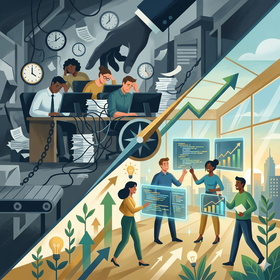
The fixed-price contract immediately and automatically misaligns the incentives of the client and the vendor. They are no longer partners; they are adversaries in a zero-sum game.
- The Client's Incentive: To get the most possible value and functionality for the fixed price. Any new idea or discovery (like Feature C) becomes a battle to have it re-classified as "part of the original scope."
- The Vendor's Incentive: To deliver exactly what is specified in the SOW (and not one pixel more) in the least amount of time, using the fewest resources, to maximize their profit margin.
In this scenario, the vendor's own UX team, which should be the client's greatest advocate, is muzzled. Their discovery that Feature A is a failure is not an opportunity for improvement; it is a financial risk to their company. The vendor is now financially incentivized to persuade the client that Feature A is "good enough" or "meets the SOW requirements," even when they know it's a poor user experience. Their goal shifts from building a great product to simply fulfilling the contract.
The Tyranny of the "Change Request"
The mechanism invented to handle this inevitable friction is the "Change Request" (CR). While it sounds like a reasonable control, in practice, it is a bureaucratic nightmare that destroys agility and poisons the relationship.
Let's return to our e-commerce project. The client wants to scrap Feature A and build Feature C. The vendor correctly states this is a "Change Request." The project grinds to a halt while the vendor's team spends two weeks (often billable) analyzing the "impact" of this change. They return with a CR document stating that building Feature C will add $75,000 to the cost and delay the project by 6 weeks (partially because they have to undo work already done on Feature A).
The client is now faced with a terrible choice:
- Accept the CR: Pay more money and take a schedule hit, infuriating stakeholders.
- Reject the CR: Force the vendor to knowingly build the "wrong" feature (Feature A) simply to adhere to the original contract.
More often than not, driven by budget constraints or "getting what they paid for," the client chooses option 2. The result is a mediocre product, delivered "on time and on budget," that fails in the marketplace. The CR process doesn't foster collaboration; it fosters resentment. The client feels "nickled and dimed" for every change, and the vendor feels the client is "indecisive" and trying to get free work.
The Hidden Cost of Mediocrity and Technical Debt
The pressure to protect a fixed margin has another, more insidious victim: quality.
When a development team hits an unforeseen technical challenge—a complex API integration, a difficult database query—they are faced with a choice. They can spend 40 hours solving it correctly (the scalable, secure, and maintainable way), or they can spend 8 hours hacking it together (the "good enough" way that just passes the test).
In a fixed-price model, 40 hours of "unplanned" work is a direct hit to the vendor's profit. The incentive is overwhelmingly to choose the 8-hour hack. The SOW never specifies "clean code," "scalable architecture," or "thorough unit testing." It just says, "the user must be able to log in."
The result is a product riddled with technical debt. The product is delivered, but it is a "house of cards"—fragile, brittle, and impossible to update or scale. The client, believing they got a "good deal" on the initial build, will spend two or three times that amount over the next few years just fixing bugs, refactoring the codebase, and fighting performance issues. From a UX/UI perspective, this is equally devastating. There is no time or budget for "polish"—the micro-interactions, smooth animations, and thoughtful error states that separate a "functional" product from a "delightful" one.
2. Time & Materials (T&M) as a Catalyst for Agility and Partnership
Now, let's contrast this with the Time & Materials model. In its simplest form, T&M means the client pays the vendor an agreed-upon rate for the time their team actually works on the project.
For many, this sounds terrifying. "A blank check!" they cry. "How do I control the cost? They'll just work slowly!"
This is the central misunderstanding of the T&M model. T&M is not a blank check; it is a high-trust, high-transparency model that shifts the focus from controlling the initial cost to controlling the continuous value.
The Perfect Synergy: T&M and Agile Methodologies
Modern, successful product development runs on Agile methodologies (Scrum, Kanban, etc.). The core principle of Agile is that we cannot know everything at the start. The process is built on short, iterative cycles (Sprints), continuous delivery, constant feedback, and the ability to change direction based on new information.
A Fixed-Price contract is structurally incompatible with true Agile. You cannot have a "fixed scope" and be "agile" at the same time. It is a fundamental contradiction.
Time & Materials is the native financial model for Agile. In an Agile T&M engagement, the client doesn't buy a list of features. They buy the capacity of a dedicated team for a set period. For example, the client hires a "pod" (1 UX designer, 2 developers, 1 QA) for a 2-week Sprint.
This team has a "backlog" (a prioritized list of tasks) managed by a Product Owner (ideally, the client). The team works on the most important items at the top of that list. At the end of the Sprint, they deliver working, tested software. The client and team review it, gather user feedback, and then re-prioritize the backlog for the next Sprint.
Let's replay our e-commerce disaster, this time with T&M. Four months in, the usability test reveals Feature A is a failure and Feature C is the answer. What happens?
- No panic.
- No "Change Request."
- No re-negotiation.
At the next Sprint Planning meeting, the Product Owner simply (1) deletes the remaining tasks for Feature A from the backlog and (2) adds the new tasks for Feature C, prioritizing them at the very top.
The team starts building Feature C in the very next Sprint. The project seamlessly adapts to the new, critical information. No bureaucracy, no animosity. It's just... the process. The process of building the right product.
From "Vendor" to "Partner": The Power of Aligned Incentives
This is the most powerful hidden advantage. T&M completely re-aligns the incentives. The vendor is no longer incentivized to "finish fast and cheap." Their incentive is to deliver so much value that the client wants to keep paying for the next Sprint.
How do they deliver value? By being efficient, transparent, and building a high-quality product that achieves the client's business goals.
Under T&M, when the UX designer says, "Our user data shows this flow is confusing, we need to rethink it," everyone is on the same side of the table. The shared goal is solving the user's problem. The vendor is paid for the hours it takes to find the right solution, not just the original one.
This alignment fosters radical honesty. The vendor can (and should) proactively say: "We've analyzed the backlog, and we believe Feature X, which you asked for, will have low user impact. Our data suggests we should pause it and instead spend this Sprint optimizing the checkout. It will take the same amount of time but will likely increase your conversion rate by 5%."
In a fixed-price world, this conversation is impossible. The vendor is paid to build Feature X. If they don't build it, they are in breach of contract! In T&M, the client is thrilled. They have just saved time and money by not building a useless feature and reinvested it in a high-value one. The vendor wins by proving their strategic value, securing the client's trust and, consequently, future Sprints.
Focusing on "Outcomes" over "Outputs"
The fixed-price model is obsessed with outputs (the 50 features in the SOW). The T&M model is focused on outcomes (the business results).
Fixed Price asks: "Did we deliver the 50 features on the list?" T&M asks: "Did we increase user retention by 10%?"
This shift is profound. A T&M contract pays for a team's expert effort to solve a business problem. If that team can solve the problem by building just 3 high-impact features instead of 10 low-impact ones, the client has won. They achieved their business goal faster and for less money.
This is especially critical for UX/UI. Our job is not "to make screens." Our job is "to reduce user friction" or "to increase task completion rates." These are outcomes. In a T&M model, we are given the permission and budget to do the real work: user research, A/B testing, data analysis, and iteration. In fixed-price, this essential "process" work is the first thing cut because it's not a tangible "deliverable" in the SOW. T&M lets you pay for the process, and the process is what guarantees a quality outcome.
3. The Hidden UX Advantages: Permission to Discover
As UX/UI specialists, our entire job is to navigate ambiguity. We are explorers mapping the territory of user needs. A fixed-price contract demands a perfect, detailed map of the world before we've even set sail. A T&M contract gives us the ship, the crew, and the time to actually explore, draw the map as we go, and change course when we find a new continent.
Enabling the "Build-Measure-Learn" Cycle
Quality UX design is not a linear phase. It is a continuous loop: Build -> Measure -> Learn.
- Build: Create a low-fidelity wireframe, a high-fidelity prototype, or a minimum viable feature.
- Measure: Get it in front of real users and observe their behavior.
- Learn: Analyze the feedback and data to find out what works, what doesn't, and why.
- Iterate: Go back to step 1, refining the design based on what you just learned.
The fixed-price model fundamentally breaks this loop. It typically budgets for one "design phase" at the beginning. Once the "screens are approved" (often by a committee, not by users), they are considered "done." Any learning from a usability test that requires a significant redesign is, you guessed it, a Change Request. This forces the UX team to be "right the first time," which is impossible.
Under T&M, this loop is the work. The client isn't buying "50 final screens." They are buying "40 hours of UX design time" within a Sprint. Those 40 hours might be spent:
- Sketching 10 variations of a user flow.
- Building a prototype of the 3 most promising ones.
- Testing them with 5 users.
- Discovering that all 3 have a fatal flaw.
- Scrapping them all and sketching a new, 4th concept based on that feedback.
At the end of the Sprint, the "deliverable" might only be one single, validated user flow, not the 10 screens a SOW might have demanded. But that one flow is proven to work. It has infinitely more value than 10 unvalidated screens that lead to failure. T&M gives the UX/UI team permission to be wrong early, so they can find the right solution through iteration, rather than just delivering the specified (and likely wrong) solution.
Shared Ownership of Quality: Budgeting for "Polish"
What makes an app feel "premium" and "delightful"? It's rarely the core features. It's the "polish": the buttery-smooth animations, the haptic feedback, the witty microcopy in an error state, the lightning-fast performance, and the inclusive, accessible design.
In a fixed-price project, these items are "gold-plating." They are the first things to be cut when the timeline or budget gets tight. The team is forced to ship a "minimum viable" product that is functional but joyless, clunky, and often inaccessible.
In T&M, quality is a conscious, shared priority. The Product Owner and the team can, and should, decide that an upcoming Sprint will be dedicated entirely to "Polish & Performance." They can create tasks in the backlog for "Refactor the search component for 300ms faster response" or "Audit and fix all accessibility color contrast issues."
The client pays for this time, and they do so willingly, because they understand that this work—while not adding new "features"—directly increases product value, user retention, and brand reputation. T&M allows the UX/UI team to advocate for this critical "last 10%" of work that makes all the difference, and it gives the client a clear mechanism to budget for it.
4. Making T&M Work: Trust, Transparency, and Controls
For those still wary of the "blank check," it's critical to understand that T&M does not mean "no budget" or "no accountability." A mature T&M engagement is built on radical transparency and clear controls.
It's Not a Blank Check: Estimates, Caps, and Reporting
A good T&M partner does not just start a timer and send you a bill. The process is far more structured.
- Initial Discovery/Roadmapping: A project often begins with a small, fixed-price or T&M-with-a-cap "Discovery Phase." The goal is to understand the business problem, conduct initial user research, and define a high-level product backlog and roadmap.
- Backlog Estimation: The team provides estimates (using "story points" or time ranges) for the features on the roadmap.
- Budgeting & Forecasting: Based on these estimates and the team's "velocity" (how much work they can complete per Sprint), the vendor can provide a forecast. "We believe the Minimum Viable Product (MVP), which includes features X, Y, and Z, will take approximately 4-5 months and cost between $150,000 and $190,000."
- Setting Controls: This forecast is not a fixed bid, but it's a budget. The client has numerous levers of control:
- Monthly/Quarterly Caps: "We approve a T&M budget not to exceed $50,000 per month."
- Burn Rate Reports: The vendor provides weekly reports showing hours burned against the budget.
- Re-prioritization: If one feature takes longer than expected, the client doesn't need a CR. They simply de-prioritize a lower-value feature to stay within the overall budget.
The Power of Radical Transparency
The real control in T&M comes from transparency. The client has a 100% open window into the team's work.
- Shared Project Management Tools: The client has full access to the Jira/Trello board. They can see every task, every comment, and all progress in real-time.
- Mandatory Demos: At the end of every Sprint (typically every 1-2 weeks), the team must demonstrate working, shippable software. There is no hiding. The client sees tangible progress constantly.
- Open Communication: The client is (and should be) in daily communication with the team via Slack and participates in key Agile ceremonies like Sprint Planning and Sprint Retrospectives.
This transparency creates the ultimate control: the client can pull the plug at any time. If, after two Sprints, the client is not happy with the team's velocity, quality, or communication, they can simply stop the engagement. They are not locked into a 9-month contract. This ultimate lever of control is what keeps the T&M vendor laser-focused on efficiency and value delivery, far more than any SOW ever could.
This brings us to the great paradox. Fixed-Price feels low-risk (known cost) but is extremely high-risk (risk of building the wrong product). T&M feels high-risk (variable cost) but is extremely low-risk (risk is mitigated every single Sprint by building and validating).
Conclusion: From On-Scope Delivery to Continuous Value Creation
The choice between Fixed Price and Time & Materials is more than a line item. It is a decision that will define the very DNA of your product. The fixed-price model offers the seductive promise of absolute certainty. It is a contract built on a static list of "deliverables." But in the fluid, complex world of digital product design, this certainty is a mirage. It is a rigid framework that penalizes learning and punishes adaptation. It forces good teams to choose between quality and profitability. It turns collaborators into adversaries, fighting over scope. And it compels us, as designers and developers, to deliver what was specified, not what is right. A fixed-price contract buys you certainty of cost at the expense of all certainty of value. You will get your product for $500,000, but there is no guarantee anyone will want it.
Time & Materials, in contrast, accepts the uncertainty of the final cost. But in doing so, it buys something infinitely more valuable. It buys the process and expertise of a dedicated, aligned team. It buys agility. It buys the permission to make small mistakes, learn from them, and pivot. It is a model that aligns every single person toward one shared goal: product success. It empowers a UX/UI team to do their actual job: to discover, to test, to iterate, and to polish. It makes space for technical quality, long-term maintainability, and true innovation. T&M manages the only risk that truly matters: the risk of building the wrong thing. Transparency, communication, and constant delivery are its mechanisms of control. Success is not measured by checking the last box on an SOW. It is measured in every single Sprint, with working software that users love. In the end, the choice is simple. If you are building a brick wall and you know exactly how many bricks you need, by all means, use Fixed Price. But if you are exploring a new continent in search of gold... ...you do not pay your explorers a fixed price for a map they haven't drawn yet. You pay them for their time, their expertise, and their process of exploration. You let them follow the rivers, climb the mountains, and find the real value. That is Time & Materials. It is the financial engine of genuine innovation.