D Mastering the Flow: How to Budget Effectively Using a Time and Materials Approach
Por Redacción Aguayo
In the dynamic world of project management, particularly in software development and creative industries, the only constant is change. Traditional fixed-price models, while offering apparent cost certainty, often crumble under the weight of evolving requirements, unforeseen complexities, and the very innovation they are meant to foster. This rigidity can lead to contentious change orders, compromised quality, or stalled projects. Enter the Time and Materials (T&M) model—a framework designed for agility and transparency. However, its inherent flexibility is often misinterpreted as a lack of financial control, a "blank check" that terrifies budget holders. This perception couldn't be further from the truth. Effective T&M budgeting is not about relinquishing control; it's about exercising it differently. This comprehensive guide will dismantle the myths and provide a strategic, actionable framework for mastering the T&M approach, transforming it from a source of financial anxiety into a powerful tool for delivering exceptional value.

A conscious shift from fighting change to embracing it as a strategic asset
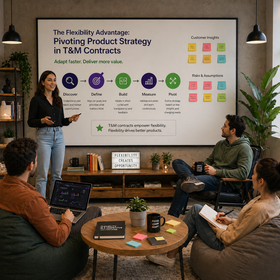
To truly harness the power of a Time and Materials model is to make a conscious shift from fighting change to embracing it as a strategic asset. This approach is not about passive acceptance of spiraling costs but about creating a robust, transparent, and collaborative ecosystem where every dollar and every hour is accounted for and purposefully directed. It requires moving beyond a simple transactional relationship to a genuine partnership built on shared understanding and mutual goals. This journey begins by dismantling the foundational misconceptions of the model and building a structured framework brick by brick. We will explore how to establish clear rules of engagement, implement rigorous governance, and foster a culture of open communication. This is where budgeting ceases to be a static document and becomes a living, breathing component of the project's lifecycle—a tool for navigating the inevitable currents of change not with fear, but with purpose and precision.
Before implementing a T&M budget, it's crucial to understand its core principles and how it fundamentally differs from other models. This foundational knowledge is key to setting correct expectations with stakeholders and building a system of trust and transparency.
- What is Time & Materials (T&M)? A Clear Definition At its core, a T&M contract is a straightforward agreement where a client pays a supplier for the actual time spent by their team and for the cost of any materials or direct expenses used in the project.
- Time: This component is calculated based on the number of hours worked by various team members (e.g., developers, designers, project managers, QA analysts). Each role typically has a pre-agreed hourly, daily, or monthly rate. This is the most significant cost driver in most T&M projects.
- Materials: This is a broader category that includes all other direct costs incurred to complete the project. This can range from software licenses, stock photography, and cloud hosting fees to hardware rentals, travel expenses, and specialized third-party services. These costs are typically passed through to the client at cost or with a small, pre-agreed markup.
- The primary advantage is that the client pays only for the work that is actually done and the resources that are actually consumed. This is ideal for projects where the scope is not fully defined at the outset or is expected to evolve.
- T&M vs. Fixed Price: The Core Differences Understanding the contrast with the more traditional Fixed Price model illuminates the strategic advantages and trade-offs of T&M.
- Debunking the Myth: T&M is Not a Blank Check The single greatest fear preventing the adoption of T&M is the "blank check" fallacy. This myth stems from the idea that without a fixed total, costs will inevitably spiral out of control. However, a professionally managed T&M project is fortified with numerous controls and mechanisms that provide financial oversight and predictability. The absence of a fixed price does not mean the absence of a budget. The key is that the budget is managed dynamically through:
- Estimates and Forecasts: While not a guarantee, the project starts with a detailed estimate. This forecast is regularly updated based on actual progress, allowing the client to see the projected total cost at all times.
- Caps and Thresholds: Budgets can be capped on a weekly, monthly, or total project basis. "Soft caps" can trigger a mandatory review meeting, while "hard caps" can halt work until a new budget is approved.
- Extreme Transparency: The client receives regular, detailed reports showing exactly who worked on what, for how long, and what the outcome was. This level of insight allows for early detection of inefficiencies or scope deviations.
- Client Control: The client is an active participant in the steering of the project. They are constantly involved in prioritizing the backlog, meaning no work is done without their explicit or implicit approval. They hold the power to steer the project toward the highest-value features, ensuring the budget is always spent on what matters most.
- A well-executed T&M model is a "controlled burn" rather than a "wildfire." The client holds the matches and the fire hose, directing the resources where they are most needed to achieve the best possible outcome.
2. Building the Framework for Effective T&M Budgeting
A successful T&M engagement doesn't just happen; it's built on a robust framework of clear agreements, sound estimation practices, and protective financial mechanisms. This framework is established before the project begins and serves as the constitution governing the entire engagement.
- Establishing Clear Rate Cards and Roles The rate card is the foundational pricing document. Ambiguity here can lead to disputes later. It should be agreed upon and signed off on before any work commences.
- Role-Specific Rates: This is the most common and transparent approach. Each role (e.g., Junior Developer, Senior UX Designer, Project Manager, QA Engineer) has a specific hourly rate. This allows the client to understand the cost implications of the team composition and to request changes if needed. For example, they might decide a task can be handled by a mid-level developer instead of a senior to manage costs.
- Blended Rates: In some cases, a single "blended" rate is used for the entire team. This simplifies invoicing but reduces transparency. The client doesn't know the cost difference between having a senior architect or a junior tester working on their project. This is generally less desirable for true T&M transparency but can be used for very small, consistent teams.
- Clarity on Inclusions: The rate card or contract should explicitly state what is included in the hourly rate. Typically, it covers the employee's time and standard overhead (office space, basic utilities, administrative support). It should also clarify what is not included and will be billed as "materials."
- The Importance of the Statement of Work (SOW) in a T&M Context In a T&M project, the SOW's role shifts. Instead of defining a rigid, immutable scope, it defines the rules of the game. It's a governance document that outlines how the two parties will work together. Key elements include:
- Project Vision and Goals: What is the business objective we are trying to achieve? This serves as the North Star for all prioritization decisions.
- Initial Team Composition: The proposed team structure and the roles each member will play.
- Agreed-Upon Rate Card: The official rates for all roles.
- Governance and Reporting Cadence: How and when will progress be reported? This includes daily stand-ups, weekly financial summaries, and monthly steering committee reviews.
- Invoicing and Payment Terms: The frequency of invoicing (e.g., bi-weekly, monthly) and the payment due dates.
- Change Management Process: How will new ideas or changes to existing plans be introduced, estimated, and approved?
- Definition of "Materials": A clear list of what constitutes a billable expense outside of labor hours.
- Estimates, Not Guarantees: The Art of the Ballpark Figure Estimation in a T&M project is a critical exercise in managing expectations. It's essential to communicate that all figures are estimates, not fixed quotes, and to explain why they will change over time.
- The Cone of Uncertainty: Introduce stakeholders to this concept. At the very beginning of a project (the "idea" phase), estimates can have a variance of up to 4x in either direction. As the project progresses, requirements become clearer, and the team learns more, the cone narrows, and estimates become more accurate.
- Types of Estimates:
- Rough Order of Magnitude (ROM): A very early, high-level estimate used for initial budget planning. It might be expressed as a wide range (e.g., "$75k - $150k").
- Ballpark Estimate: A more refined estimate based on initial discovery and high-level requirements. The range is narrower (e.g., "$90k - $120k").
- Phase-Based or Sprint-Based Estimates: As the project gets underway, work is broken down into smaller pieces (features, user stories). Each piece is estimated with much greater accuracy just before work begins. This is the most reliable form of estimation within a T&M model.
- Communicating Estimates: Always present estimates as a range. Provide the assumptions made to arrive at that range. This transparency helps the client understand what could cause the final cost to be at the lower or higher end of the estimate.
- Setting Caps and Thresholds: Your Financial Safety Nets This is the most potent tool for dispelling the "blank check" fear. Caps and thresholds provide concrete financial controls and force regular, strategic check-ins.
- Budget Caps: These are explicit limits on spending.
- Total Project Cap (Hard Cap): A "do not exceed" number for the entire project. Work stops when this number is hit unless a formal contract amendment is made. This provides ultimate budget security for the client.
- Monthly/Weekly Caps (Hard Caps): Limits spending within a specific period. This is useful for clients with fixed monthly budgets and helps smooth out cash flow.
- Budget Thresholds (Soft Caps): These are not stop-work limits but rather triggers for communication.
- Percentage Thresholds: "Notify us when we have consumed 50% of the estimated budget, and again at 75% and 90%." These notifications trigger a mandatory review meeting to assess progress, re-evaluate the remaining scope, and forecast the final cost. This prevents surprises and allows for proactive decision-making. The client might decide to cut a lower-priority feature to ensure the essentials are delivered within the original budget estimate.
- Budget Caps: These are explicit limits on spending.
By implementing this robust framework, you create a controlled environment where the flexibility of T&M can flourish without creating financial uncertainty.
3. Governance and Communication: The Engine of T&M Success
A perfect framework is useless without execution. The day-to-day and week-to-week processes of communication, tracking, and collaboration are what bring a T&M budget to life and ensure it remains on track. This is less about contracts and more about operational rhythm and partnership dynamics.
- The Rhythm of Reporting: Daily Stand-ups, Weekly Summaries, and Monthly Reviews Consistent, multi-layered communication is the bedrock of T&M success. Each layer serves a different purpose and audience.
- Daily Stand-ups: This is a brief, tactical meeting for the core project team (including the client's product owner). It answers three questions: What did I do yesterday? What will I do today? What are my impediments? From a budget perspective, this provides immediate visibility into any blockers that could be wasting time and money.
- Weekly Financial Summaries: This is a non-negotiable report for the client-side budget holder. It should be simple and clear, detailing:
- Hours worked by each team member in the past week.
- Total spend for the week.
- Cumulative spend for the project to date.
- Percentage of the estimated budget consumed.
- A brief summary of key accomplishments. This report ensures there are no financial surprises at the end of the month.
- Monthly Steering Committee Reviews: This is a higher-level, strategic meeting. The audience typically includes senior stakeholders from both the client and supplier side. The agenda focuses on:
- Review of progress against major milestones and business goals.
- Updated forecast for the total project cost and timeline.
- Discussion of major risks and opportunities.
- Strategic decisions about the future direction of the project and prioritization of upcoming large-scale features.
- Tools of the Trade: Time Tracking and Project Management Software Manual reporting is prone to error and inefficiency. The right software tools are essential for providing real-time, trustworthy data.
- Time Tracking Software (e.g., Harvest, Toggl, Everhour): This is the source of truth for all "Time" costs. Every team member must meticulously track their time against specific tasks or user stories. The software should allow for easy report generation that can be shared directly with the client.
- Project Management Software (e.g., Jira, Asana, Trello): This is where work is defined, estimated, and tracked. When integrated with time tracking tools, it provides a powerful link between effort (hours logged) and output (features completed). A client can look at a specific feature in Jira, see the original estimate, and view the actual time logged against it, providing granular transparency.
- Burn-down/Burn-up Charts: These visual tools, often native to project management software, are excellent for showing progress over time. A burn-down chart shows how much work is remaining, while a burn-up chart shows how much has been completed. When overlaid with budget consumption, these charts provide an at-a-glance view of project health and value delivery.
- The Change Request Process: Managing Scope Creep with Agility In a T&M model, "scope creep" is reframed as "scope evolution." Change is not the enemy, but it must be managed systematically. Even small changes need to be acknowledged and their impact assessed.
- Idea Capture: A new idea or requested change is captured as a new item in the project backlog.
- Initial Triage: The product owner (client) and project lead (supplier) briefly review the idea to determine its strategic fit.
- Estimation: If the idea is deemed worthy of consideration, the delivery team provides a high-level estimate of the time and potential material costs required to implement it.
- Prioritization: The product owner then decides where this new item fits within the existing backlog. By placing it high on the priority list, they are implicitly agreeing to de-prioritize something else or to extend the timeline and budget. This makes the trade-offs of every decision explicit.
- Approval: For significant changes that will materially impact the budget or timeline, formal approval from the budget holder may be required.
- Building a Partnership: The Client-Vendor Relationship in T&M Ultimately, T&M is a relational model, not a transactional one. It fails in an environment of mistrust or an "us vs. them" mentality. Success depends on fostering a true partnership.
- Shared Ownership: Both parties must feel responsible for the project's success. The supplier's goal is not just to bill hours but to deliver maximum value within the client's budget. The client's role is not just to monitor costs but to provide clear, timely decisions to keep the project moving efficiently.
- Radical Candor: There must be open and honest communication. If the development team is struggling with a technical challenge that is consuming more time than expected, they must raise the issue immediately. If the client is concerned about the rate of budget burn, they must voice it without delay. Problems should be treated as shared challenges to be solved together.
- Celebrate Wins Together: Acknowledge milestones and celebrate the value being delivered. This reinforces the sense of a unified team working toward a common goal, building the trust necessary to navigate the inevitable challenges of any complex project.
Conclusion: From Financial Framework to Strategic Partnership
Ultimately, mastering the Time and Materials model transcends mere accounting. It represents a fundamental shift in the philosophy of project execution. It is a deliberate move away from the rigid, often adversarial, nature of fixed-scope agreements. It is an embrace of the reality that innovation and discovery are not linear processes. The frameworks discussed—clear rate cards, robust SOWs, and financial caps—are the skeleton. They provide structure, support, and the necessary boundaries for financial safety. But the true lifeblood of a successful T&M engagement is the governance that surrounds it. This is found in the relentless rhythm of communication and the unwavering commitment to transparency. It’s in the daily stand-ups that nip inefficiencies in the bud. It’s in the weekly financial summaries that eliminate all possibility of surprise. It’s in the monthly strategic reviews that ensure the project remains aligned with core business goals. This is where budgeting evolves from a static constraint into a dynamic, strategic lever. It becomes a tool for making informed decisions, for pivoting with intelligence, and for adapting to new information.
The model demands a higher level of client engagement, not as a burden, but as an empowerment. It places the client firmly in the driver's seat, armed with real-time data. They have the power to prioritize, to question, and to steer. This transforms the client-vendor dynamic from a simple transaction into a true partnership. It fosters an environment of shared risk and, more importantly, shared reward. The fear of the "blank check" is replaced by the confidence of "total visibility." Uncertainty about the final cost is replaced by clarity on the value delivered each day. T&M is not an easier path, as it requires discipline and constant communication. However, for complex projects that venture into the unknown, it is undeniably the more honest one. It acknowledges that the journey of creation is one of learning and adaptation. It provides a commercial structure that supports, rather than penalizes, this evolution. When executed with professionalism and a spirit of collaboration, it doesn’t just get projects done. It allows for the creation of better products, stronger relationships, and more predictable outcomes. It ensures that every hour billed and every dollar spent is a conscious investment. An investment made not just in completing a set of tasks, but in achieving a valuable business objective. The Time and Materials approach, therefore, is not about spending more or less. It's about spending smarter. It is about navigating the inherent volatility of a project with purpose. It is about building something great, together, one transparently-billed hour at a time. This approach is the pinnacle of agile budgeting and collaborative success.