D Choosing the right "Time and Materials" partner in LATAM: A Strategic UX/UI Perspective
Por Redacción Aguayo
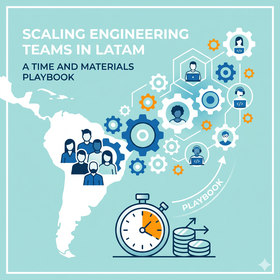
The Latin American (LATAM) region has emerged as a premier destination for Time and Materials (T&M) and nearshoring engagements in the software development world. Its competitive advantages—including a favorable time zone overlap with North America, a growing talent pool, and cultural affinity—make it an attractive proposition. However, the T&M model, which relies on a fluid scope and close collaboration, demands a partner selection process that goes far beyond a simple rate comparison. For a project to succeed, particularly in the complex and iterative domain of UX/UI design and subsequent development, the chosen partner must be an extension of your strategic team, not just a contractor. This blog post dives deep into the strategic, often overlooked, criteria that ensure you select a LATAM T&M partner capable of delivering true user value, fostering innovation, and managing the inherent risks of a flexible engagement model.

Setting the Stage for Collaborative Excellence: Beyond the Rate Card
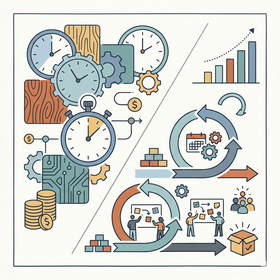
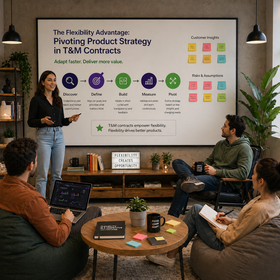
The decision to adopt a T&M model is often driven by the need for flexibility—the scope is uncertain, the requirements are evolving, or the project requires deep, continuous experimentation (a hallmark of good UX/UI practice). This flexibility is both the model's greatest strength and its most significant risk. It means you are not buying a final product; you are buying the capacity, expertise, and time of a team. Therefore, the core of your selection process must pivot from evaluating mere technical competency (which is table stakes) to assessing strategic alignment, cultural maturity, and communication fluidity. The right partner in LATAM understands that their role is to contribute to your product vision, not merely to execute a backlog. This involves embedding a strategic UX/UI mindset from the outset, ensuring every hour billed contributes measurably to a positive user experience and tangible business outcomes.
1. From Tactical to Strategic UX: A Mindset Shift
In a T&M environment, the client pays for every hour spent. It is critical that those hours are not wasted on reactive, tactical fixes but are invested in proactive, strategic design and development. The partner's UX/UI maturity defines this distinction.
The Tactical Approach: Reacting to the Problem
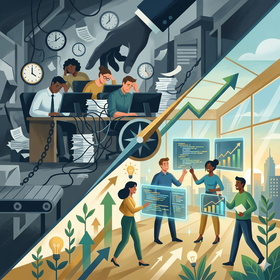
A tactical partner focuses on filling the next sprint. Their UX/UI team might execute an A/B test because you asked for it, or clean up an interface based on a superficial bug report. They are great order-takers, meticulously following instructions.
- Characteristics: Focus on outputs (wireframes, screens, code commits); minimal questioning of requirements; prioritizes speed over long-term sustainability.
- Risk in T&M: You risk paying for continuous rework because the team fails to identify the root cause of user friction or business challenges, leading to scope creep and budget overruns without corresponding value.
The Strategic Approach: Anticipating and Solving
A strategic partner, particularly one leveraging the problem-solving ethos of LATAM talent, asks "Why?" before "How?". They view the T&M structure as an opportunity for continuous discovery and optimization.
- Characteristics: Focus on outcomes (improved conversion, reduced support tickets); proactive user research and data analysis to challenge requirements; embeds UX/UI designers and researchers upstream in the planning process.
- Key Question to Ask: "How do you integrate business analytics and user feedback (e.g., Hotjar, Mixpanel) into your sprint planning, and how often do your designers present findings that shift the product roadmap?"
UX in the Boardroom: Measuring Design Impact
The ultimate sign of a strategic UX/UI partner is their ability to tie design decisions to business metrics. They don't just deliver beautiful interfaces; they deliver measurable value.
- Evidence: Look for case studies that quantify UX/UI success in terms of ROI (Return on Investment), not just awards. Metrics should include Customer Lifetime Value (CLV), task completion rates, or reduction in time-to-value.
- The T&M Advantage: In a T&M model, this partner actively uses the flexibility to conduct low-cost experiments to validate high-impact design hypotheses before engaging in expensive development, thus optimizing the use of billable hours.
2. Prioritizing the Essential: Using Evidence for Tough Decisions
The open-ended nature of T&M requires robust internal prioritization mechanisms. Without them, the project scope can drift indefinitely, burning budget without focus. The partner must demonstrate a mature Agile methodology that is disciplined by evidence.
Focus on the Problem, Not the Solution
In complex digital transformations, stakeholders often suggest solutions (e.g., "We need an AI chatbot"). A strategic partner reframes these suggestions back to the underlying user problem (e.g., "Our users can't find information quickly enough").
- Partnership Test: Assess their documentation style. Do their tickets start with User Stories (e.g., "As a user, I want...") or with technical tasks? A true strategic T&M team co-writes User Stories and Acceptance Criteria with you, ensuring the value is defined before the effort.
Impact vs. Effort Prioritization
Effective T&M management hinges on a clear, shared prioritization framework, often visualized through a matrix that plots potential Impact (value to the business/user) against Effort (estimated T&M hours/cost).
- The LATAM Edge: A mature LATAM partner should be able to challenge your internal stakeholders on low-impact, high-effort features, advocating for quick wins (high impact, low effort) to demonstrate early ROI and build momentum.
- Due Diligence: Ask for a walkthrough of their typical backlog refinement session. The discussion should heavily feature data points and projected ROI, not just technical complexity.
The Voice of the Customer as Guide
In LATAM, nearshoring partners often have sophisticated access to a culturally diverse talent pool, allowing for rich, nuanced user research. A T&M contract is a continuous discovery contract.
- Continuous Discovery: The partner must have dedicated time blocks within the T&M allocation for research activities (interviews, surveys, usability testing) and a formal process for injecting those findings directly into the sprint backlog.
- Red Flag: A partner that suggests "parking" all user research until a later phase, or treats it as a non-billable overhead, is tactical. Strategic UX/UI is continuous and fully integrated.
3. Communication and Collaboration: UX as a Strategic Partner
The T&M model is fundamentally a relationship of trust, built on flawless communication. In a cross-cultural environment like LATAM nearshoring, this element is amplified, becoming the single biggest determinant of success or failure.
Speaking the Language of the Business
The most valuable T&M teams don't just speak excellent English (a common trait in LATAM; check for the specific country’s proficiency), but they also speak the language of your business. They must understand your industry dynamics, your competitive landscape, and your profit drivers.
- Beyond Code: The technical lead or project manager should be able to articulate how a specific architectural decision (e.g., microservices vs. monolithic) impacts time-to-market or operational expenditure (OPEX).
- The UX/UI Translator: The UX lead must translate user pain points into revenue opportunities or cost reduction (e.g., "Fixing this flow will reduce call center volume by 15%").
Cross-Departmental Collaboration
A T&M team in LATAM must integrate seamlessly not only with your product owner but with engineering, marketing, and sales departments. Siloed work is antithetical to the Agile, collaborative spirit of T&M.
- Integration Points: Inquire about their experience with DesignOps and DevOps pipelines. The UX/UI work must flow directly into the development and testing environments without friction.
- Example: A strong partner will proactively schedule show-and-tell sessions with your marketing team to ensure that the user interface's visual identity aligns with brand messaging and campaign goals.
UX as a Facilitator of Change
The T&M partner often brings external, objective expertise that can challenge internal orthodoxies. This is especially true in UX/UI, where the partner might be introducing design systems, accessibility standards (WCAG), or lean experimentation practices that are new to your organization.
- Soft Skills Assessment: Evaluate the team's assertiveness and consultative selling skills. Do they feel comfortable pushing back on a suboptimal request with a data-driven alternative, or do they simply acquiesce to avoid conflict? The best T&M partners will push back constructively to save you money and improve the product.
- Cultural Fit: LATAM culture is known for its strong emphasis on personal relationships and hierarchy. Ensure the partner’s internal structure encourages junior members to speak up and challenge senior design/development decisions if they have data to support their claim—this is vital for continuous quality improvement.
4. Risk Mitigation and Governance: Protecting the T&M Investment
The T&M model necessitates rigorous governance to prevent "runaway budgets." The chosen LATAM partner must have clear, transparent, and proactive mechanisms for risk management, quality assurance, and continuous performance review.
Transparency in Tracking and Reporting
You are paying for time. Therefore, transparency in time tracking is non-negotiable.
- Tooling: Mandate the use of shared, real-time tools (e.g., Jira, Azure DevOps, Clockify) that allow your team to see exactly what work is being logged, by whom, and against which feature/ticket.
- Granularity: Demand detailed time logging that differentiates between discovery, design, development, testing, and meetings. This allows you to audit the allocation of T&M hours against the strategic priorities.
- Weekly Audits: Establish a formal weekly ritual where the project manager reviews the previous week's billed hours against the agreed-upon outcomes (velocity) and forecasts the remaining budget consumption, using burn-down charts.
Quality Assurance and UX Review Gates
In a T&M setup, the focus can shift to speed. The partner must prove that quality gates, especially for UX/UI, are built into the workflow.
- Definition of Done (DoD): The DoD for every feature must include specific UX/UI criteria:
- Usability Testing Passed: The feature has been tested with a minimum of 5 real users and achieved a task completion rate of X%.
- Accessibility Compliant: Reviewed against WCAG 2.1 AA standards.
- Design System Aligned: All components use the approved design system library.
- Nearshore QA Integration: Assess the integration between the development and QA teams. The QA engineers should be involved early, not just at the end, testing against the user acceptance criteria defined by the UX/UI team.
Financial Forecasting and Budget Flexibility
A strategic T&M partner provides clear, actionable financial forecasting, enabling the client to make informed decisions about scope adjustments or resource scaling.
- Predictive Velocity: After a few sprints, the partner should be able to provide a reliable velocity metric (points completed per sprint) and use it to project a budget completion date for the current scope.
- Scaling Flexibility: The LATAM partner’s ability to quickly scale up or down is a key T&M advantage. Ask about their talent pipeline and the onboarding process for new developers/designers. Can they add a Senior React Developer or a dedicated UX Researcher in 2-4 weeks without compromising quality?
5. Cultural Alignment and Retention Strategy
The ultimate success of a nearshoring T&M engagement depends on the stability and motivation of the team. The LATAM talent market is competitive; your partner's retention strategy is your risk mitigation strategy.
Cultural Bridges and Time Zone Overlap
The cultural affinity is a major selling point for LATAM. However, true alignment goes beyond a shared love for certain sports or similar work ethics. It involves adapting to communication nuances.
- Communication Styles: LATAM professionals are often highly collaborative but may communicate feedback less directly than their North American or European counterparts. The partner must provide cross-cultural training to their team and demonstrate how they navigate feedback loops to ensure clarity.
- Meeting Rhythms: Ensure that a significant block of the T&M team's workday overlaps with your core hours (e.g., 9 am to 1 pm EST). This ensures real-time collaboration on complex UX/UI problems, minimizing reliance on asynchronous communication.
Talent Retention and Employee Value Proposition (EVP)
The stability of your T&M team directly impacts knowledge transfer and efficiency. High turnover is a T&M budget killer.
- Attrition Rate: Ask for the company’s annual attrition rate for the past three years, specifically for developers and designers at the levels you are hiring. A rate below 15% is generally considered healthy.
- Employee Engagement: What does the partner do to retain talent? Look for investments in professional development, certifications (e.g., AWS, PMP, UX/UI bootcamps), and a strong internal culture. A happy, engaged team translates directly into better performance and lower T&M overhead due to less onboarding/offboarding.
Creating a Unified Team
The goal should be a single, cohesive team. The best LATAM T&M partners facilitate this integration by:
- Shared Tools and Slack Channels: Everyone is on the same platform, sharing the same jokes and work updates.
- Rotation/Exchange Programs: Funding short visits for the LATAM team to your HQ (and vice versa) to build personal rapport and contextual understanding.
- Unified Performance Reviews: Having your product owner provide direct feedback on the T&M team members (designers, developers, PMs) as part of the partner's internal review process. This elevates the sense of accountability and shared purpose.
Choosing a T&M partner in LATAM is not a procurement exercise; it is a strategic co-investment in your product's future. By prioritizing strategic UX/UI maturity, data-driven prioritization, and robust governance, you turn the flexible T&M model into a potent engine for innovation and sustained competitive advantage. The lowest rate rarely buys the best long-term value.
Conclusión: The Co-Creation Imperative
The shift toward nearshoring in LATAM has democratized access to world-class technical talent, presenting an unparalleled opportunity for organizations seeking flexibility and velocity through the Time and Materials model. However, the true value of a LATAM T&M partnership is not realized in the initial contract signing, but in the day-to-day execution that elevates the engagement from transactional task delivery to strategic co-creation. We have meticulously explored the triad of non-negotiable success factors: strategic alignment, robust governance, and cultural integration. A partner that exhibits Strategic UX/UI Maturity views the T&M hours not as a commodity to be spent, but as capital to be invested in continuous user discovery and high-impact feature validation. They proactively challenge the status quo, advocating for solutions that are rooted in quantifiable data—be it through A/B testing results, usability metrics, or business ROI projections. This is the litmus test that separates the mere implementer from the genuine product contributor.
The Governance Framework must be watertight, characterized by hyper-transparency in time tracking, granular effort allocation (distinguishing design, research, and coding hours), and a disciplined prioritization process that ruthlessly focuses on high-impact, low-effort wins. This prevents the dreaded "scope drift" and ensures every dollar spent contributes measurably to the intended business outcome. Finally, the often-underestimated factor of Cultural and Communication Fluidity underpins the entire operation. The best LATAM partners act as cultural interpreters, ensuring feedback is clear, intentions are understood, and the development team feels a true sense of ownership over the client's product vision. Their low attrition rate and investment in their team’s professional development—from advanced design certifications to domain-specific knowledge—become your project’s most potent risk mitigation strategy. Ultimately, the decision to choose a T&M partner in LATAM is a declaration of commitment to a collaborative, iterative future. By selecting a firm that sees itself as a strategic partner, a co-creator, and a champion of the user experience, you are not just acquiring talent; you are securing a competitive edge in the volatile, fast-paced world of digital product development. Choose wisely, prioritize the strategic over the tactical, and prepare for a rewarding journey of co-creation that delivers exceptional value, sprint after sprint. The success of your digital product hinges on this pivotal decision.