D Hiring from LATAM: Practical Tips for Managing Time & Materials Projects
Por Redacción Aguayo
Latin America has become a top destination for companies seeking high-quality, cost-effective talent, particularly in the tech and creative sectors. With a skilled workforce, growing tech hubs, and favorable time zone alignment with North America, hiring nearshore professionals from countries like Brazil, Mexico, Colombia, and Argentina is a strategic move. However, managing these relationships, especially under a Time & Materials (T&M) contract, requires a specific approach to ensure project success and budget predictability. This blog post will explore the unique opportunities and challenges of working with LATAM teams on a T&M basis, providing practical tips to optimize collaboration, communication, and project management for excellent results.

The T&M Model: A Strategic Approach for Modern Projects
A Time & Materials (T&M) contract is a flexible agreement that bills a client for the hours worked by a team (Time) plus the cost of any materials or resources used (Materials). This model is ideal for projects with undefined or evolving scopes, where the final product or solution isn't fully mapped out from the start. Unlike a rigid fixed-price contract, T&M allows for agility, iteration, and adaptation to change, making it a perfect fit for innovative projects, research and development, or long-term partnerships. However, this flexibility comes with a caveat: it requires a high degree of mutual trust, clear communication, and vigilant project management to ensure the budget stays on track and the client receives a clear return on their investment. It is not a passive model; it is a partnership that thrives on active engagement from both parties.
Why LATAM is a Perfect Fit for a T&M Model
The inherent flexibility and collaborative nature of a T&M model pairs exceptionally well with the strategic advantages of hiring nearshore talent from Latin America. This synergy has transformed LATAM into a prime destination for companies seeking to scale their operations.
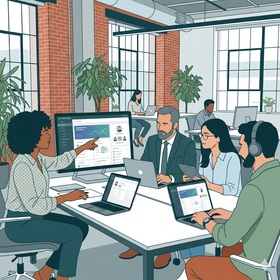
- Agile Collaboration: The T&M model is fundamentally built on close, iterative collaboration—the very core of agile methodologies. The significant time zone overlap between most of LATAM and North America (from EST to PST) is a game-changer. This proximity allows for real-time communication during the business day, facilitating daily stand-ups, impromptu brainstorming sessions, and immediate feedback on new features or design changes. This seamless flow of information minimizes delays and ensures that the entire team, regardless of location, is aligned and working toward a common goal. This is a critical advantage over teams in Asia or Eastern Europe, where real-time collaboration can be challenging due to vast time differences.
- Access to Specialized Skills: The burgeoning tech scene in countries like Brazil, Mexico, Colombia, and Argentina has cultivated a vast and diverse pool of highly skilled professionals. These regions are home to top-tier developers, designers, data scientists, and project managers with expertise in the latest technologies and platforms. A T&M contract is the ideal mechanism to tap into these specialized skills for a specific duration without the long-term, rigid commitment of a fixed-price project. This allows you to scale your team up or down as needed, ensuring you always have the right talent for the job at hand.
- Cost Efficiency: While a T&M project doesn't have a fixed cost, the competitive hourly rates of LATAM talent provide a significant value proposition. The cost of living and labor rates in many Latin American countries are lower than in North America or Western Europe, which translates to competitive billing rates for clients. This means you can secure more hours of high-quality work for your budget, maximizing your project's potential without compromising on talent.
Practical Tips for Managing T&M Projects with LATAM Teams
To ensure your T&M project is a success, you need to implement specific strategies that go beyond a typical project management approach. The following points are crucial for building a transparent and productive remote partnership.
1. Establish a Culture of Transparency and Trust
A T&M contract can quickly feel like a blank check if not managed properly. Transparency and trust are the antidotes to this. They are not merely buzzwords; they are the bedrock of a successful T&M partnership.
- Clear Expectations: Start the project with a foundational understanding of what is expected from every team member. Be explicit about your requirements for time tracking. Agree on a single, shared tool (e.g., Jira, Trello, or a dedicated time-tracking app like Toggl) and a consistent methodology for logging hours. This includes detailing what constitutes a billable hour and what doesn't. This prevents ambiguity and ensures both parties are operating under the same rules.
- Regular, Detailed Reporting: Time tracking alone isn't enough. It's crucial to request detailed weekly or bi-weekly reports. These reports should go beyond a simple list of hours worked. They should provide context: what specific tasks were completed, what challenges the team faced, how they were overcome, and what the priorities are for the next period. This keeps everyone accountable and provides you with a granular, real-time view of progress, allowing you to identify potential issues before they become major problems.
- Open Communication about Scope: Embrace the fact that T&M projects are designed to be flexible. When a new feature is requested or a change in direction is necessary, don't just add it to the backlog. Have an open, honest conversation with the team about how this will affect the timeline, the budget, and the current priorities. This practice prevents scope creep from turning into "budget creep" and builds a strong foundation of mutual trust.
2. Optimize for Time Zone Overlap
While LATAM time zones are a major advantage, they are not identical. Effective time management is still a critical skill.
- Define Core Collaboration Hours: To make the most of the time overlap, define a set of "core hours" where all team members are expected to be available for meetings, instant messaging, and real-time collaboration. Even a 3-4 hour window is enough for daily stand-ups, client meetings, and crucial design or development discussions. This provides a rhythm to the project without requiring everyone to be online for a full 8-hour shift at the same time.
- Leverage Asynchronous Communication: For tasks and updates outside of the core hours, rely on clear, written asynchronous communication. Use project management tools to document decisions, provide comprehensive updates, and post questions that don't require an immediate response. This allows the team to be productive around the clock without the pressure of constant real-time interaction, maximizing efficiency across all time zones.
- Mindful Meeting Scheduling: Use a shared calendar and a scheduling tool to find the best times for meetings. Be mindful of cultural differences; some countries may have different national holidays or regional work-hour norms. Acknowledging and respecting these differences shows a commitment to your team's well-being and fosters a positive working relationship.
3. Streamline Communication and Feedback Loops
Effective communication is the lifeblood of any successful remote T&M project. Without it, even the most talented team will struggle.
- Establish a Communication Protocol: Define which communication channels to use for different purposes. For instance, designate Slack or a similar tool for quick questions and informal chats, email for formal updates and document sharing, and Zoom or Google Meet for face-to-face meetings. This prevents important information from getting lost in a sea of pings and ensures everyone knows where to look for specific types of information.
- Provide Contextual Feedback: Avoid one-word or vague feedback. Instead of saying "This looks good," explain why it looks good. If something needs to be changed, explain the reasoning behind the request and provide specific examples. This not only improves the final product but also helps the team understand your vision, making them more effective and proactive in the long run.
- Embrace Cultural Sensitivity: Be aware of and sensitive to cultural nuances. Latin American professionals often value building personal relationships and rapport before diving deep into work. Taking a few minutes for an informal chat at the start of a meeting can make a huge difference in building rapport and creating a more collaborative and trusting atmosphere.
4. Proactively Manage Scope and Budget
The "Materials" part of a T&M contract isn't just about software licenses; it’s about managing the project's evolving scope and ensuring it aligns with the budget.
- Define Sprints and Milestones: Even with a flexible T&M contract, it’s essential to break the project into manageable sprints with defined goals and deliverables. This provides a clear structure, allows you to measure progress effectively, and ensures the team is focused on delivering tangible results at regular intervals.
- Regular Retrospectives: Hold regular retrospective meetings to discuss what's working, what's not, and how to improve. This feedback loop is crucial for adapting and optimizing the project process, team dynamics, and even the T&M management strategy itself.
- Establish Budget Guardrails: While T&M offers flexibility, it's wise to set budget guardrails from the outset. Establish a soft budget cap or a monthly "burn rate" that you monitor closely. This doesn't mean the project stops when you reach the limit, but it triggers a checkpoint: a re-evaluation of the scope, a re-prioritization of tasks, or a discussion about adjusting the budget. This proactive approach prevents unexpected costs and keeps the project aligned with your financial expectations.
Conclusion: The Future of Remote Collaboration
Hiring from LATAM is a powerful way to access top talent and scale your business efficiently. When managed correctly, a Time & Materials (T&M) contract with a nearshore team can offer the perfect blend of flexibility, cost-effectiveness, and high-quality results. This model thrives on trust and transparency, allowing you to adapt to market changes and pivot your project's direction as needed, without the constraints of a rigid fixed-price agreement.
By prioritizing clear communication, optimizing for time zone overlaps, and adopting a structured approach to project management, you can build a strong, trusting relationship with your LATAM team. This not only ensures the success of your current project but also lays the foundation for a lasting partnership that can drive your business forward in the ever-evolving landscape of global remote collaboration. Embracing the T&M model with a LATAM team is a strategic decision that positions your company for agility, innovation, and long-term growth.